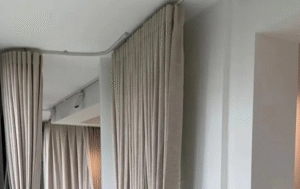
You’ve received the samples from several potential suppliers. Lined up on your desk, the aluminum curtain tracks look almost identical. They feel sturdy, and the finish looks clean. But you have a nagging feeling that you’re missing something. You know that approving a sample for a thousand-room hotel project based on a surface-level check is a massive risk. A small, overlooked flaw in the sample could multiply into a huge installation disaster, costing you time, money, and your professional reputation.
When checking hotel curtain track samples, move your focus from the aluminum profile to the smaller, often-ignored components. While the track’s finish and weight are important, the true signs of manufacturing quality are found in the brackets, screws, gliders, and end caps. The compatibility, material quality, and finish of these accessories are where costs are secretly cut, and where long-term problems like installation difficulties and maintenance issues begin. It is these details that separate a reliable system from a cheap imitation.

I learned this lesson the hard way early in my career. We were competing for a large hotel project, and the buyer chose a competitor with a slightly cheaper price per meter on their track. The samples looked very similar. Six months later, I got a call from that same buyer. He was in a panic. His installation crews were days behind schedule. The competitor’s cheap screws were stripping, the flimsy plastic mounting brackets were cracking, and installers were wasting hours on every single room. The small savings on the track were completely wiped out by massive labor overruns. That day, I truly understood that the smallest parts cause the biggest problems.
How do you inspect aluminum thickness and coating quality in curtain track samples?
You have a track sample in your hands. It feels solid, and the white powder coating looks smooth. It seems fine. But you’re worried about what you can’t see. Is the aluminum wall thinner than it should be, just waiting to bend under the weight of a heavy blackout curtain? Is that perfect finish just a thin layer of paint that will scratch and flake off the moment an installer’s tool touches it? Approving a sample with a poor finish could lead to hundreds of rooms with visible defects.
To properly inspect a sample, use tools, not just your eyes. Use a digital caliper to measure the wall thickness in several spots to check for consistency. For the coating, don’t be afraid to abuse it. Try to scratch it with a coin or your fingernail in an inconspicuous area. A high-quality powder coat should resist minor scratches. This hands-on testing gives you a far more accurate picture of durability than just looking at it.

Measuring Wall Thickness
Standard visual inspection isn’t enough. A difference of 0.2mm in wall thickness is invisible to the eye but can make a huge difference in strength and rigidity over a 3-meter span. Get a simple digital caliper. Measure the profile wall in at least three different places. A reliable manufacturer will have consistent thickness, showing they have good control over their extrusion process. Significant variations indicate poor process control and potential weak spots in the final product.
Judging the Coating
The finish is the first line of defense. For powder coating, feel for a smooth, uniform texture. Look for "orange peel" (a bumpy texture) or areas where the coating is thin, especially in the inner channels of the track. The real test is adhesion. I always recommend the "coin test." Try to scrape the surface firmly with the edge of a coin. A weak coating will flake or chip off easily. A good, properly cured powder coat will be surprisingly tough.
Don’t Forget the Accessories
Now, apply that same level of inspection to the accessories. Is the powder coating on the metal brackets the same color and quality as the track? Often, suppliers use a cheaper, lower-quality finishing process for the small parts. Hold the bracket next to the track under a good light. Do they match perfectly? Mismatched whites or varying gloss levels are a red flag that they are cutting corners.
| Quality Check | Poor Sample (Red Flag) | Good Sample (Green Flag) |
|---|---|---|
| Wall Thickness | Varies significantly when measured. | Consistent to within +/- 0.1mm. |
| Coating Feel | Bumpy, uneven, or thin in spots. | Smooth and uniform everywhere. |
| Scratch Test | Flakes or chips easily with a coin. | Resists minor scratches and pressure. |
| Accessory Finish | Color/gloss doesn’t match the track. | Perfect color and gloss match. |
Why can glider and end stop compatibility affect installation efficiency?
The sample track looks good, so you slide a few of the included gliders into the channel. They move, but one or two seem to catch or drag a little. You figure it’s just a sample. The plastic end stop feels a bit tight to push in. It is easy to dismiss these as minor issues. But imagine your installers on site, having to deal with this in 500 different rooms. That little bit of catching means curtains that don’t operate smoothly. That tight end stop means wasted minutes and frustrated workers on every single window.
Glider and end stop compatibility is a direct indicator of the manufacturer’s precision. When these parts work together perfectly, it shows that the manufacturer controls the tolerances of both their extrusion and their plastic injection molding. Gliders should move silently and effortlessly, with no catching. End stops should click into place with firm, satisfying feedback, not requiring excessive force or tools. These small details are what separate a professional-grade system from a frustrating, low-quality one.

Testing the Gliders
Don’t just slide one glider. Put ten of them in the track sample. Hold the track at a slight angle and see if they all slide down smoothly under their own weight. Then, turn the track upside down. Do the gliders fall out easily, or are they held securely in the channel? A good glider design will slide freely when upright but resist falling out. Check the material. Are they made from POM (Polyoxymethylene) or Nylon, which are self-lubricating and durable, or a cheaper, more brittle plastic like PP (Polypropylene)?
Checking the End Stops and Brackets
The end stop is another component where precision matters. It should fit snugly without being difficult to install or remove. Look closely at the plastic molding. Are there rough edges or "flash" (excess plastic) from a worn-out mold? This is a sign of low-quality manufacturing. Do the same with the mounting brackets. Does the track click securely into the bracket? Is it easy to mount and unmount? If it’s a struggle on your desk, it will be a nightmare for an installer on a ladder.
The Sound of Quality
This may seem strange, but listen to the track system. A well-made system is quiet. Slide the gliders back and forth quickly. You should hear a soft, smooth "shhhh" sound. A scraping, rattling, or clicking sound indicates poor tolerances, rough finishes inside the track, or low-quality glider material. This sound is a direct preview of what the hotel guest will hear every time they open or close their curtains.
| Component | What to Check for | Sign of Poor Quality | Sign of High Quality |
|---|---|---|---|
| Gliders | Movement | They catch, drag, or rattle. | Silent, effortless glide. |
| End Stops | Fit and Finish | Requires force; has rough edges. | Clicks in firmly; smooth mold. |
| Brackets | Track Fit | Loose fit or very difficult to snap on. | Secure "click" with easy attachment. |
| Materials | Plastic Type | Brittle, cheap-feeling plastic (PP). | Smooth, durable plastic (POM/Nylon). |
How can you evaluate load capacity from just a sample?
You’re holding a 30cm sample of a curtain track. The supplier’s datasheet claims it can hold 8kg per meter. How can you possibly verify that? You’re specifying this track for heavy, floor-to-ceiling blackout curtains in a luxury hotel. The last thing you want is a call in six months that tracks are bending or pulling away from the wall. The liability is huge, and a simple sample doesn’t seem to offer much proof of its strength.
You evaluate a track system’s load capacity by inspecting the mounting brackets and the track’s profile design, not just by feeling the track itself. Look at the gauge of the steel used for the brackets. Look for reinforcing ribs or folds that add strength. The track’s strength comes from its shape and wall thickness, while the brackets are what transfer that load to the wall or ceiling. A thick, heavy track is useless if it’s held up by flimsy brackets.

It’s All About the Brackets
This is where manufacturers save money. The track itself is aluminum, but the brackets are often steel. Ask for the specifications of the bracket. What is the thickness (gauge) of the steel? For heavy-duty applications, you want to see brackets made from at least 1.2mm or 1.5mm thick steel. Bend it with your hands. Does it flex easily? A good bracket will feel incredibly rigid. Also, check the quality of the screws included. A strong bracket mounted with cheap, soft screws is a complete system failure waiting to happen.
Analyzing the Track Profile
While you can’t load-test a short sample, you can analyze its design. Look at the cross-section of the track. Does it have internal fins or a box-like structure? These geometric features add rigidity without adding excessive weight. A simple, flat "U" shape profile is inherently weaker than a more complex profile with the same wall thickness. This shows the level of engineering that went into the product.
Ask for the Test Report
For load capacity, you should not rely on a visual inspection alone. Ask the supplier for their in-house or third-party test report for the specific track and bracket combination. The report should be detailed. It should specify how the test was conducted, the distance between brackets during the test, and the exact point of failure (e.g., track bent at 10kg/m, or bracket deformed at 12kg/m). A supplier who can’t provide this data is a major red flag.
| Feature | Weak Component | Strong Component |
|---|---|---|
| Bracket Material | Thin steel (<1.0mm), flexes easily. | Thick steel (>1.2mm), very rigid. |
| Bracket Design | Simple flat L-shape. | Reinforcing ribs or folds for strength. |
| Track Profile | Simple U-shape or C-shape. | Complex shape with internal supports. |
| Documentation | Vague claim like "heavy-duty". | Provides a detailed load test report. |
What are common red flags in curtain track samples that indicate poor manufacturing?
You’ve checked the samples, and one supplier is significantly cheaper than the others. The sample looks "good enough." The track seems okay, and the parts fit together. It can be very tempting to go for the cost savings. But experience tells you that there’s no such thing as a free lunch in manufacturing. You suspect that there are hidden compromises, but you’re not sure what subtle signs to look for that scream "low quality."
The most common red flags are found in the details that are easy to overlook: sharp edges on the track ends, brittle-feeling plastic accessories, and low-grade screws. These indicate a lack of care and a focus on cost-cutting over quality. Sharp edges mean they skip the deburring process. Brittle plastics mean they use reground or cheap raw materials. And cheap screws show a disregard for the installer and the system’s long-term security.

Sharp Edges and Burrs
Run your finger carefully along the cut end of the track sample. Does it feel sharp? Can you feel little metal burrs? This shows the factory doesn’t have a deburring step after cutting the tracks. While this seems minor, it speaks volumes about their attention to detail. It’s a sign they are rushing production and skipping finishing steps. It also poses a safety risk to installers and can snag fabrics. A quality manufacturer will provide a clean, smooth-to-the-touch edge.
The Snap Test for Plastics
Take one of the plastic components, like an end cap or even a glider if you have a spare. Try to bend it. A part made from good quality virgin polymer (like POM or Nylon) will flex. It will feel tough. A part made from cheap or recycled plastic will feel brittle. If you bend it too far, it will snap cleanly with a sharp "crack." This is a huge red flag. These parts will become even more brittle over time, especially with UV exposure from a window, and will be the first things to fail.
The Screw Head Test
This is my favorite test. Take the provided mounting screw and a good quality screwdriver. Drive the screw into a piece of scrap wood. Now, try to back it out. Examine the screw head. Is the Phillips or slot head starting to strip or deform? Cheap screws are made from soft metal, and they will strip easily, causing immense frustration for installers. A good quality, hardened steel screw1 will withstand multiple uses without any damage. This tiny component is one of the most reliable indicators of a manufacturer’s overall quality philosophy.
| Red Flag | What It Indicates | Why It Matters |
|---|---|---|
| Sharp Metal Edges | Skipped deburring process. | Lack of attention to detail, safety risk. |
| Brittle Plastics | Use of cheap or regrind material. | Parts will crack and fail over time. |
| Soft Screw Heads | Low-grade metal hardware. | Installation problems, security risk. |
| Inconsistent Finish | Poor process control. | Unprofessional appearance, durability issues. |
Conclusion
When that box of samples arrives, remember that the most important clues are not in the most obvious places. Look past the long piece of aluminum and become an inspector of the small things. Check the fit and feel of the gliders. Scrutinize the strength of the brackets and the quality of the screws. Test the finish not just on the track, but on the accessories, too. As I’ve seen time and again, these small details are what separate a successful, smooth-running project from a costly nightmare. Investing a few extra minutes to thoroughly vet these components will save you countless hours and dollars in the long run.
Relate
-
Explore the advantages of hardened steel screws for durability and reliability in your projects. ↩