You’re managing a massive hotel project with hundreds of rooms. The plans look perfect, and every room seems identical. But you know the reality on a job site is different. A small oversight, like choosing the wrong curtain track system, can cause huge problems. You worry about installation crews hitting unforeseen steel beams or plumbing, leading to costly delays and budget overruns. Your entire project timeline is at risk because of a detail that seemed so simple months ago.
To successfully choose curtain tracks for large hotel projects, you must prioritize systems with adaptable mounting hardware. While track strength and aesthetics are important, the biggest hidden cost comes from structural inconsistencies between rooms. A track system that offers versatile brackets and fastening solutions for different wall and ceiling conditions is the key. This adaptability allows installers to handle unforeseen obstacles quickly, keeping labor costs down and the project on schedule.

I started my career on the factory floor and have been involved in countless large-scale hotel builds. I see designers and procurement managers debating the clean lines of a ceiling mount versus the simplicity of a wall mount. From my perspective, they are often missing the most expensive problem. The real issue is that the building itself is never as perfect as the blueprints. On a big project, no two rooms are truly identical. What installers find behind the drywall on the third floor is different from the fifth. This is where projects go off the rails. A single, rigid installation plan will fail, and labor costs will explode as crews struggle to adapt. The best system isn’t just the strongest—it’s the most flexible.
Which track systems perform best for heavy blackout curtains in hotels?
You need a track that can handle the sheer weight of heavy, wide, and often long, blackout curtains. You worry that a standard track will bow, or the carriers will jam, leading to guest complaints and maintenance calls. It is a big risk. Choosing a system that fails under the load not only ruins the guest experience but also costs a fortune in replacements and repairs. You need a solution that is both strong and reliable for years to come.
The best systems for heavy blackout curtains use commercial-grade aluminum I-beam profiles combined with ball-bearing carriers. An extruded aluminum I-beam shape provides superior structural rigidity to prevent sagging over long spans. Ball-bearing carriers, with their steel or polymer wheels, ensure the heavy fabric glides smoothly and quietly with minimal effort. This combination guarantees long-term durability and a premium user experience, even with the heaviest draperies.

The Power of the I-Beam Profile
For heavy-duty applications, the shape of the aluminum extrusion is critical. A flat or simple C-channel track is prone to torque and sag under weight. A commercial track with an I-beam or box-like profile provides far greater strength. The added vertical material acts like a structural beam, distributing the load evenly and maintaining its straightness across wide window expanses. When you specify your track, ask for the profile’s cross-section diagram and weight per foot. A heavier, more complex profile almost always means a stronger track.
Ball-Bearing Carriers Are Non-Negotiable
With heavy curtains, the friction on standard plastic slide carriers is immense. It makes the curtain difficult to pull and will eventually wear out both the carrier and the track. Ball-bearing carriers are the solution. Each carrier has small, enclosed wheels that roll along the track’s internal channel. This reduces friction to almost zero. It allows a guest to move a 50-pound curtain with just their fingertips. For any hotel aiming for a luxury feel, this effortless glide is a must-have detail.
Consider Dual-Channel Systems
For very wide windows or complex layouts involving both a sheer and a blackout curtain, a dual-channel track is the most robust solution. These are single, unified extrusions with two parallel tracks. This provides a cleaner installation than mounting two separate tracks side-by-side. It also ensures perfect alignment and spacing between the two curtains, and the combined structure is even more rigid and resistant to twisting.
| Feature | Standard Track System | Heavy-Duty Blackout System |
|---|---|---|
| Track Profile | Simple C-Channel | Extruded I-Beam or Box Profile |
| Carriers | Plastic Slide Hooks | Ball-Bearing or Wheeled Carriers |
| Weight Capacity | Low (up to 20 lbs) | High (50 lbs or more) |
| Performance | High friction, noisy, prone to jamming | Effortless glide, silent, reliable |
How do ceiling-mounted vs. wall-mounted tracks affect hotel room aesthetics?
Your interior design team is pushing for a clean, floor-to-ceiling curtain look, which requires ceiling-mounted tracks. However, your construction manager warns that walls are easier and faster to work with. You are caught in the middle. You need to make a decision that satisfies the design vision without causing installation headaches and budget overruns. Choosing the wrong one can either compromise the room’s aesthetic or lead to expensive, time-consuming structural work.
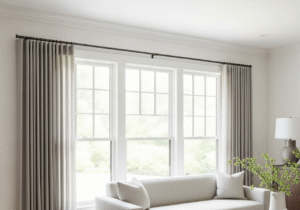
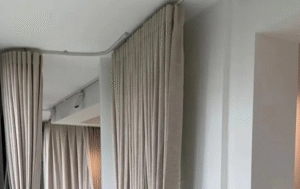
Ceiling-mounted tracks create a seamless, modern aesthetic, making rooms feel taller and more luxurious by allowing curtains to run from floor to ceiling. Wall-mounted tracks are more traditional and can be easier to install, but they create a visible gap above the window. The best choice depends on the desired design effect and, more importantly, the building’s structure. A system with flexible mounting options for both is the safest choice for large projects.

The Case for Ceiling-Mounted Tracks
Designers love ceiling-mounted tracks for good reason. They allow curtains to completely cover the wall, creating a dramatic, high-end "curtain wall" effect. This look conceals the hardware entirely, making the fabric the star of the show. It also maximizes light blockage when using blackout curtains, as there is no gap at the top for light to leak through. This is a huge factor in guest comfort. However, this aesthetic is entirely dependent on having a solid ceiling structure, like concrete or wood blocking, to anchor into.
The Practicality of Wall-Mounted Tracks
Wall-mounted tracks are often the default choice for their straightforward installation. It’s generally easier and faster for crews to locate wall studs or use heavy-duty drywall anchors than to drill into a concrete ceiling. This can lead to lower labor costs. The downside is the aesthetic compromise. The track and brackets are visible, and the gap between the track and the ceiling can break the illusion of height and allow light leakage.
The Real Deciding Factor: What’s Above the Ceiling?
On a large project, you can’t assume you can use ceiling mounts everywhere. While the plan might call for it, the reality on-site could be different. Installers may find HVAC ducts, plumbing pipes, or electrical conduits running just above the drywall, exactly where the track is supposed to go. This is why a flexible system is so important. A track that can be either ceiling-mounted where possible, or wall-mounted using extended brackets in problem areas, gives you the ability to solve these issues on the fly without stopping work.
| Mounting Type | Aesthetics | Light Blockage | Installation Complexity |
|---|---|---|---|
| Ceiling-Mount | Modern, seamless, makes room look tall. | Excellent; no gap above the track. | High; requires solid ceiling structure. |
| Wall-Mount | Traditional; hardware is often visible. | Good; but allows a light gap at the top. | Moderate; easier to find studs in walls. |
| Recessed-Mount | Ultimate minimalism; track is hidden. | Excellent; perfectly flush with the ceiling. | Very High; must be planned in construction. |
What installation challenges always arise in large-scale hotel projects?
Your project schedule is tight, and your labor budget is even tighter. You’ve planned for a smooth, repetitive installation process across hundreds of "identical" rooms. But the reality is that the first few rooms are already showing problems. The pre-drilled holes in the tracks don’t align with studs, and the standard anchors won’t work in the soft concrete on one floor. Your installation crew is spending more time problem-solving than installing, and your labor costs are starting to climb.
The biggest installation challenge in large projects is structural inconsistency. The assumption that all rooms are identical is a myth. Variations in concrete density, the location of rebar, unforeseen plumbing, and misaligned studs are common. The solution is not a rigid plan but a versatile track system. A system with a wide range of adaptable mounting hardware, like different bracket types and multiple anchor solutions, is essential to absorb these imperfections and keep the project moving.

The Myth of the Identical Room
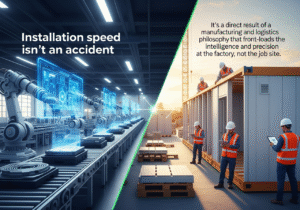
From a manufacturer’s viewpoint, we know that what’s on paper rarely matches the real world. A concrete deck poured on Monday has a different density than one poured on Friday. The rebar on the 10th floor is never in the exact same place as on the 11th. When your installers go to drill a hole for an anchor, they might hit a steel beam that isn’t on the drawings. A single, one-size-fits-all fastening solution will fail in this environment, forcing costly, room-by-room workarounds.
The High Cost of On-Site Problem Solving
When an installer runs into an unexpected obstacle, work stops. They have to find a supervisor, explain the problem, and figure out a new solution. Maybe they need a different kind of drill bit, a new type of anchor, or a custom-cut bracket. This downtime, multiplied across hundreds of rooms and a full crew, is where budgets are destroyed. Your initial savings on a cheaper, less flexible track system can be wiped out in a single day of installation delays.
The Solution: An Adaptable Hardware Ecosystem
The most successful large-scale projects use a track system that is more than just a piece of aluminum. They use a system that comes with a complete "ecosystem" of hardware solutions. This includes:
- Multiple Bracket Types: Standard wall brackets, extended wall brackets (to clear window trim), and various ceiling-mount clips.
- Adjustable Components: Splice connectors that allow for slight adjustments and brackets with slotted holes for fine-tuning.
- A Range of Fasteners: Pre-packaged anchor options for drywall, concrete, steel, and wood blocking.
By providing the installation crew with a toolbox of pre-approved solutions, they can adapt to the building’s imperfections instantly, without needing to stop work.
| Installation Problem | The Wrong System’s Result | The Right System’s Solution |
|---|---|---|
| Unforeseen Steel Beam | Work stops; need to drill new holes. | Use an adjustable bracket to shift the mount. |
| Soft/Porous Concrete | Standard anchor fails; track is loose. | Switch to a pre-approved chemical or sleeve anchor. |
| Misaligned Studs | Extra drilling; potential wall damage. | Use a track with no pre-drilled holes and versatile clips. |
| HVAC Duct in Ceiling | Cannot ceiling mount; design compromised. | Switch to an extended wall-mount bracket. |
How can customization options simplify project coordination with interior designers?
Coordinating with an interior design team on a large project can be challenging. They have a specific vision for colors, finishes, and functionality that can be hard to match with standard, off-the-shelf products. You find yourself spending valuable time trying to find workarounds or explaining why a certain look can’t be achieved. This back-and-forth slows down decision-making and can create tension between the procurement and design teams.
Customization options bridge the gap between design vision and practical installation. By working with a manufacturer that offers custom-cut lengths, a wide range of powder-coat colors, and options for motorization, you can say "yes" to the designer more often. Providing tracks that are pre-sized for each room and finished in the exact color of the window trim simplifies coordination, reduces on-site work, and ensures the final result precisely matches the designer’s intent.

Custom-Cut Lengths: The Biggest Time Saver
One of the most valuable customization options is ordering tracks cut to the exact length needed for each window. This eliminates the need for installers to spend time measuring and cutting hundreds of tracks on-site. It not only speeds up the installation dramatically but also reduces waste and the chance of measurement errors. Providing the manufacturer with a "take-off" list of all the different window sizes is a simple step that pays huge dividends in efficiency.
Custom Colors and Finishes
Designers often want all hardware in a room to match perfectly. They don’t want a standard white track if the window frames and door handles are brushed nickel or oil-rubbed bronze. A manufacturer with custom powder-coating capabilities can solve this instantly. You can provide a RAL color code to get tracks that blend in seamlessly with the room’s decor. This simple offering makes you a hero to the design team and elevates the quality of the finished project.
Pre-Kitting for Each Room
The ultimate in project coordination is "per-room kitting1." This goes beyond just custom lengths. You can work with the manufacturer to package all the components for a single room into one labeled box. For example, the box for "Room 501" would contain the custom-cut track, the exact number of carriers, the correct brackets, and all the necessary screws and anchors for that specific room. This logistical customization2 eliminates on-site sorting and ensures installers have everything they need, exactly when they need it.
| Customization Option | Benefit for Procurement | Benefit for Designers |
|---|---|---|
| Custom-Cut Lengths | Faster installation, less on-site labor. | Perfect fit for every window. |
| Custom Powder-Coat | Easily meet project color specs. | Achieves a cohesive, high-end look. |
| Per-Room Kitting | Simplifies logistics, reduces error. | Ensures correct parts are used everywhere. |
| Motorization Prep | Future-proofs the installation. | Offers guests modern, luxury automation. |
Conclusion
Choosing the right curtain track for a large hotel project is a complex decision that goes far beyond the catalog price. Success hinges on anticipating the realities of a large-scale construction site. By prioritizing systems with strong profiles, smooth-gliding carriers, and most importantly, an ecosystem of adaptable mounting hardware, you can overcome the inevitable structural inconsistencies that derail projects. Collaborating with a manufacturer on customization, from colors to kitting, further ensures a smooth workflow. This thoughtful, systems-based approach is what protects your budget, meets your schedule, and ultimately delivers a higher quality result for the hotel and its guests.