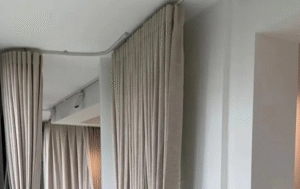
You’re leading a fast-paced hotel refurbishment. The plan seems simple: replace the dated, flimsy curtain tracks with a modern, heavy-duty system. The grand reopening goes off without a hitch. But a few weeks later, you get the call every manager dreads. A brand-new track, complete with a heavy blackout curtain, has ripped out of the ceiling and collapsed in an occupied room. Now, instead of celebrating a successful project, you’re dealing with an angry guest, potential liability, and emergency repairs.
A curtain track supplier’s true role in a refurbishment goes far beyond just delivering new hardware. Their most critical job is to act as a structural consultant, diagnosing the “invisible risks” hidden behind the old fixtures. This means conducting a pre-installation audit to probe the integrity of decades-old substrates that were never designed for modern loads. This proactive approach defuses costly failures before they happen, protecting your reputation and the hotel’s revenue.
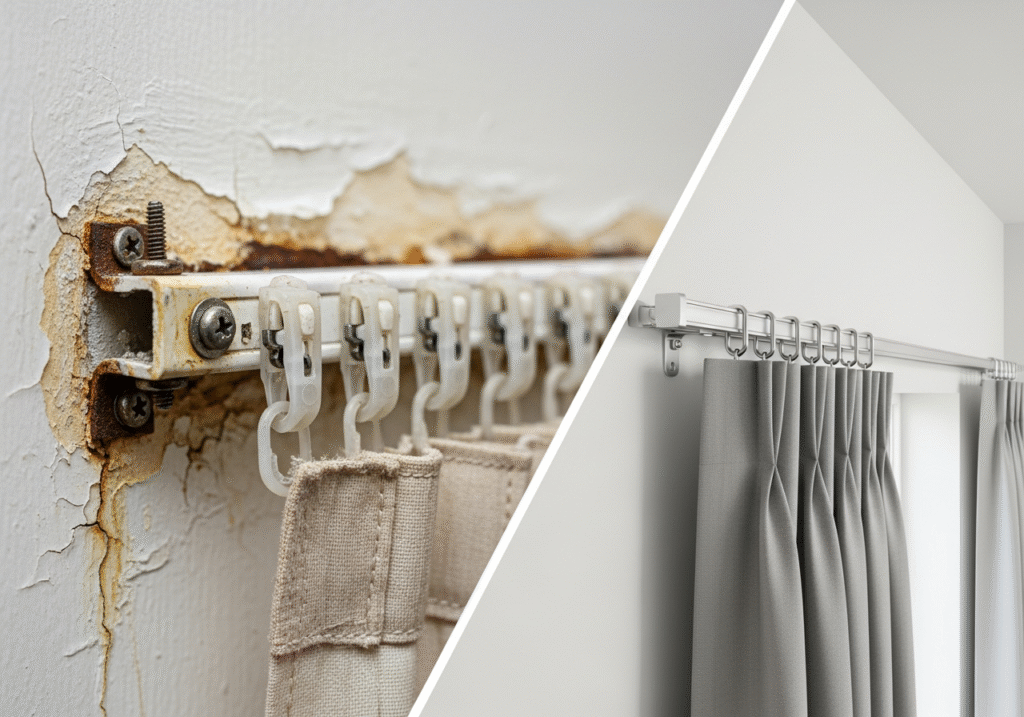
I remember walking through a beautiful historic hotel getting a major facelift. The project manager was proud of their schedule. I asked if we could pull down one of the old tracks to inspect the wall behind it. He was hesitant, worried about damaging the plaster. When we finally got it down, handfuls of crumbling, chalky debris fell out with the old, rusted screws. The wall had zero structural integrity left. Had they simply installed the new, heavier system, it would have failed within a month. That day, my job wasn’t selling tracks; it was preventing a disaster.
How Do Suppliers Help Hotels Upgrade Tracks Without Disrupting Guests?
The hotel has to stay open and profitable during a full refurbishment. The general manager is worried about the noise, dust, and disruption that comes with any construction work. They imagine upset guests complaining about drilling at 8 AM and navigating hallways cluttered with tools and equipment. Taking entire floors out of service is financially impossible, but the upgrade is non-negotiable. How can you get the job done without driving away the very guests you’re trying to impress?
An expert supplier helps by turning a disruptive renovation into a swift and silent operation. They achieve this through meticulous logistical planning, including phased scheduling and providing pre-kitted room packages. By coordinating with hotel management to work in small, contained blocks of rooms during low-occupancy hours, they minimize the project’s footprint. This "surgical" approach ensures guests remain undisturbed and the hotel continues to generate revenue throughout the upgrade.
The Phased Installation Strategy
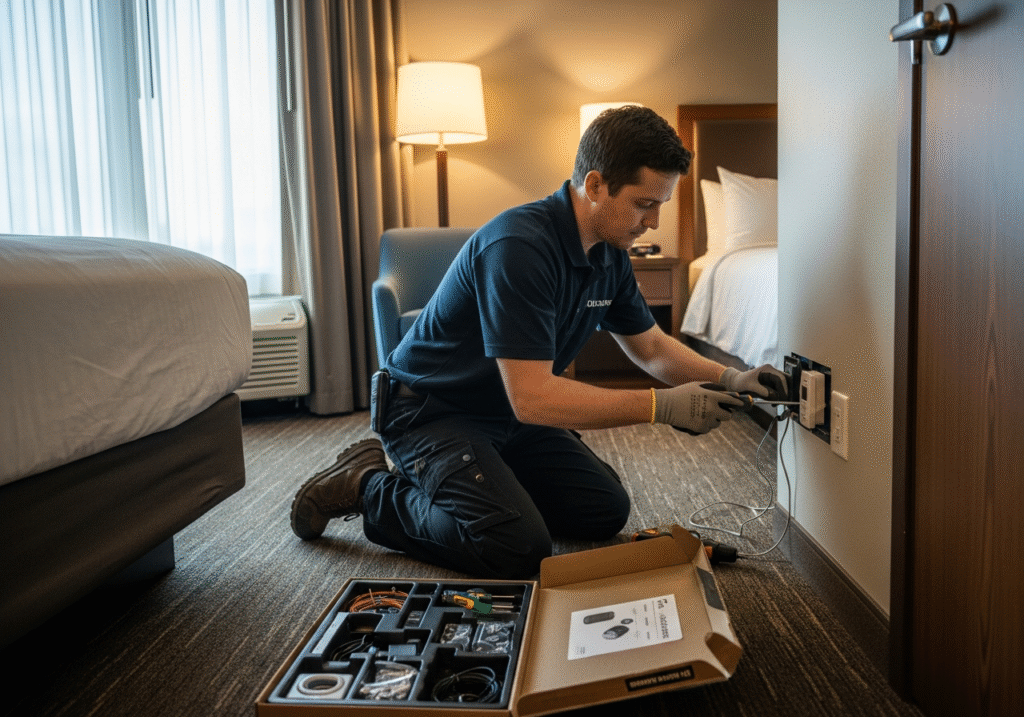
The key to a non-disruptive upgrade is to never treat the hotel like a construction site. We work with hotel management to develop a phased installation schedule. This often means working on just a handful of rooms at a time, perhaps a single cluster at the end of a hallway. The goal is to contain the work entirely within those rooms, keeping corridors clear and noise to an absolute minimum. Work is often scheduled between guest checkout and check-in times to further reduce impact.
Factory Kitting for Speed and Cleanliness
On-site work is what creates noise, dust, and mess. We eliminate most of it by preparing everything in our factory. Instead of shipping bulk boxes of tracks, screws, and gliders, we create complete, labeled room kits. Each box contains the pre-cut track, a sealed bag with the exact number of gliders and brackets, and all necessary hardware for one room. The installer walks into the room, opens one box, and has everything they need. There is no cutting, no sorting, and minimal waste.
Low-Impact Installation Techniques
Modern tools and techniques can significantly reduce noise. Using high-quality, sharp drill bits on the correct speed setting creates a cleaner hole with less noise than a brute-force approach. Installers can also use portable vacuums connected directly to their drill to capture dust at the source. It’s about being mindful that this isn’t a new build; it’s a living environment.
Phased Refurbishment Plan Comparison
| Approach | On-Site Work | Disruption Level | Room Downtime |
|---|---|---|---|
| Traditional Bulk Supply | Cutting, sorting, assembly | High (noise, dust, clutter) | High (long install time) |
| Phased Kitting Strategy | Minimal assembly only | Low (contained, quiet) | Minimal (fast install) |
What Retrofit Solutions Work Best for Older Hotel Buildings?
You’re trying to modernize a 50-year-old hotel. The walls are made of aging plaster and lath, and the concrete ceilings are dense and brittle. A standard track system won’t work. The old fixings are crumbling, and you know from experience that simply drilling new holes into the old substrate is asking for trouble. How do you anchor a heavy, modern curtain system to a structure that was never designed to support it?
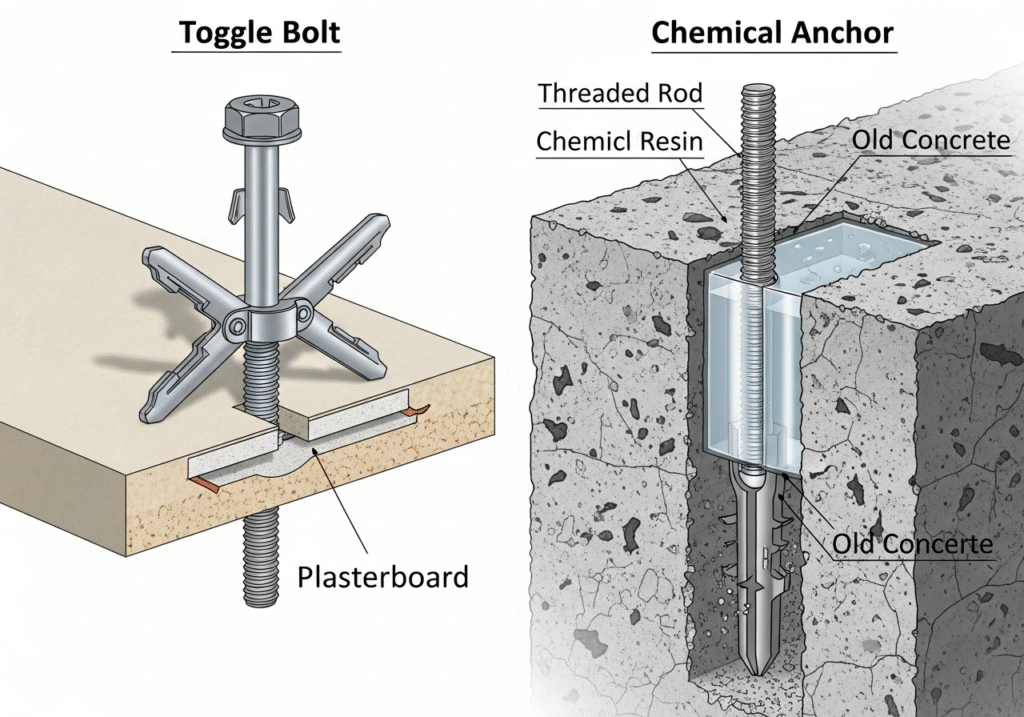
The best retrofit solution is not a single product but a combination of a versatile track system and specialized fixing hardware chosen after a thorough substrate audit. For older buildings, this often involves using tracks with more frequent bracket spacing to distribute the load, combined with advanced anchoring solutions like chemical resin anchors for brittle concrete or toggle bolts for hollow walls. The goal is to bypass the weak surface and secure the track to whatever solid structure exists behind it.
The Pre-Installation Substrate Audit
Before we recommend any product, we have to play detective. The first step is a substrate audit. This involves removing an old track and carefully examining what’s underneath. Is it concrete, brick, plaster over lath, or multiple layers of old plasterboard? We test the integrity of the material. Is the concrete brittle? Is the plaster soft and crumbling? Only after we understand the foundation can we build a reliable solution on top of it.
Solution 1: High-Density Bracketing
The simplest and most effective strategy is to increase the number of fixing points. Standard practice might be to place a bracket every 24 inches. On an older, weaker substrate, we might reduce that spacing to every 12 or 16 inches. This spreads the total weight of the curtain across more anchor points, reducing the pull-out force on any single screw. It’s a simple change that makes a huge difference in long-term stability.
Solution 2: Specialized Anchoring Systems
When the substrate itself is compromised, a standard screw and plug won’t work. We have to use more advanced anchoring technology.
- For Brittle Concrete: We often use chemical resin anchors. This involves drilling a hole, injecting a two-part epoxy resin, and then inserting the threaded rod for the bracket. The resin fills all the small cracks and voids, creating an incredibly strong bond that distributes the load over a wider area.
- For Hollow or Layered Walls: For old plasterboard or plaster and lath walls, spring or gravity toggles are the best solution. These anchors are inserted through a small hole and expand behind the wall, clamping onto a large surface area of the material and preventing pull-out.
How Can Suppliers Support Designers During Fast-Track Renovations?
An interior designer has a brilliant vision for a hotel refresh, but the timeline is incredibly tight. They need samples, technical data, and custom solutions yesterday. They don’t have time to wait weeks for a prototype or sift through complicated spec sheets. They are worried that technical limitations or slow supplier response times will force them to compromise their design. How can you, as the purchasing manager, find a supplier who can keep up?
Suppliers support designers in fast-track renovations by acting as a responsive, agile partner, not just a vendor. This means providing rapid prototyping for custom components, maintaining a digital library of CAD files for easy integration into design plans, and having a dedicated technical expert who can give instant, practical advice. By providing clear answers and tangible solutions quickly, the supplier empowers the designer to make informed decisions without delaying the project.

A Dedicated Technical Point of Contact
In a fast-track project, information can’t go through multiple layers of sales and customer service reps. The designer needs a direct line to someone who understands the product inside and out. As a manufacturer, we assign a dedicated technical expert to the project. When the designer asks, "Can this track be curved to a 12-inch radius and still support a 50-pound curtain?" they get an immediate, definitive answer, not "Let me check and get back to you."
Rapid Prototyping and Samples
A designer needs to see and feel the product. We use our in-house engineering and 3D printing capabilities to provide rapid prototyping. If a designer needs a custom-designed bracket or a unique finial, we can often produce a physical prototype within 48-72 hours. For standard items, we maintain a comprehensive sample library that can be shipped overnight. This speed allows the designer to validate their choices and get client approval without waiting weeks.
Digital Assets for Seamless Integration
Modern design happens digitally. We support this by providing designers with a complete library of our products as 2D CAD blocks and 3D models. They can simply drag and drop our track profiles and components directly into their architectural plans (like AutoCAD or Revit). This saves them hours of drafting time and eliminates errors that can occur when redrawing components from a PDF spec sheet. It ensures that what the designer draws is exactly what we will manufacture.
What Quality Checks Are Essential Before Reopening Refurbished Rooms?
The renovation is complete. The new carpets are in, the walls are freshly painted, and your new curtain tracks look stunning. The temptation is to sign off on the work and get the rooms back in service immediately. But you have a nagging feeling. What if one of the installers rushed a job? What if a motor was programmed incorrectly? A single small error discovered by a guest can damage the hotel’s reputation and spoil the entire investment.
The most essential quality check is a hands-on, functional test of every single installation, simulating real-world guest use—and abuse. This goes beyond a simple visual inspection. It involves physically operating the curtain from end to end, testing the draw wand, and performing a "pull test" on the brackets to confirm their stability. For motorized systems, it means testing every function on the remote control. This final audit is the last line of defense against post-opening failures.

The "Guest Test"
The final check should always be performed from the perspective of a guest.
- Smooth Glide Check: Open and close the curtain fully using the draw wand. Does it glide smoothly without snagging or excessive effort? Any hesitation points to a problem with the gliders or track alignment.
- Component Check: Ensure all components are present and secure. Are the end caps firmly in place? Is the wand securely attached to the master carrier? It’s the small, missing pieces that make a new installation feel cheap.
- Motorization Check: If the system is motorized, test every function. Does it open, close, and stop correctly? Does the "touch motion" feature work? Are the limits set properly so it stops perfectly at each end? Run it through a full cycle at least twice.
The Structural "Pull Test"
This is the test that a visual inspection will always miss. It mimics the "guest abuse factor" where a guest might yank on the curtain fabric itself. The inspector should apply firm, steady pressure to each bracket fixing point. There should be zero movement. Any sign of give or looseness indicates an insecure fixing that needs to be rectified immediately. This simple test is the best way to confirm the substrate audit and anchoring solution were successful.
The Punch List
The inspector should move from room to room with a detailed checklist1, known as a punch list. Each track is checked against a set of standards. Any installation that fails a check is marked on the list. No room should be handed back to the hotel until every single item on the punch list2 has been cleared. This formal process ensures nothing is overlooked and provides a clear, documented record of completion.
Conclusion
The role of a curtain track supplier in a hotel refurbishment is far more complex than just delivering boxes. We are your partners in risk management. By starting with a deep, technical audit of the hidden structures in old walls, we can design and implement a solution that is not only beautiful but fundamentally safe and reliable. Through silent installation strategies, agile support for designers, and rigorous final quality checks, we protect your project from the costly failures that hide behind a simple cosmetic upgrade. This ensures your investment enhances the guest experience for years to come.
Of course. Here are 10 relevant FAQs and a meta description based on the article you provided.
Frequently Asked Questions (FAQ)
1. What is a "substrate audit" and why is it crucial for hotel refurbishments?
A substrate audit is a pre-installation inspection where an old curtain track is removed to examine the wall or ceiling behind it. It’s crucial because it reveals the integrity of the aging substrate (plaster, concrete, etc.), allowing the supplier to identify "invisible risks" like crumbling material and specify the correct anchoring solution to prevent future failure.
2. How can suppliers prevent new, heavy curtains from falling down in an old hotel?
Suppliers prevent this by diagnosing the substrate first. Instead of using standard screws, they specify specialized anchors like chemical resins for brittle concrete or toggle bolts for hollow walls. They may also increase the number of brackets to better distribute the weight across the weaker surface.
3. What is the biggest misconception hotels have about replacing curtain tracks?
The biggest misconception is treating it as a simple cosmetic swap. In reality, it’s a structural task. The old fixings and wall material were often not designed for the weight of modern blackout curtains, making a professional substrate audit essential to avoid safety issues.
4. How can a track upgrade be done without disturbing hotel guests?
By using a "surgical" approach. This involves a phased schedule (working on a few rooms at a time during low-occupancy hours), using factory-kitted room packages to eliminate noisy on-site cutting, and employing low-impact installation techniques like dust-capturing drills.
5. What is a "factory kitted" room package?
It’s a box prepared at the factory containing all the perfectly sized and counted components for a single room’s curtain track installation. This includes the pre-cut track, a sealed bag with the exact number of gliders and brackets, and all necessary screws, eliminating on-site errors and mess.
6. How can a supplier help a designer on a very tight renovation schedule?
An agile supplier helps by providing a dedicated technical expert for instant answers, offering rapid prototyping (often using 3D printing) for custom parts, and maintaining a digital library of CAD files that designers can drag and drop into their plans to save time.
7. What is a "pull test" and why is it important for quality control?
A "pull test" is a physical check where an inspector applies firm pressure to each installed bracket to ensure it is securely anchored. This simulates real-world use and abuse from guests and is the best way to confirm the track won’t come loose from the wall over time.
8. What retrofit solutions work for brittle, old concrete ceilings?
For brittle concrete, chemical resin anchors are a superior solution. An installer drills a hole, injects an epoxy resin, and then inserts the fixing. The resin fills all voids, creating an incredibly strong bond that distributes the load and prevents the concrete from cracking further.
9. Why do suppliers need to be involved so early in a refurbishment project?
Early involvement allows the supplier to conduct a substrate audit before final decisions are made. This helps them identify potential structural issues and work with the designer and contractor to embed the correct solutions into the plan, preventing costly last-minute changes or post-opening failures.
10. What is a "punch list" in the context of a curtain track installation?
A punch list is a checklist used during the final quality inspection. An inspector goes room by room, checking each installation against a set of standards (e.g., smooth glide, all components present, secure fixings). Any failures are marked on the list, and the room is not signed off until every item is corrected.