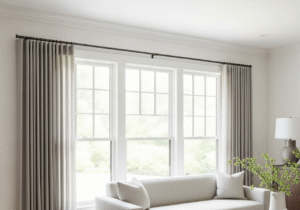
You’re sitting in a design meeting, looking at mood boards filled with matte black finishes and minimalist hardware. You’re focused on the aesthetics, making sure the curtain tracks match the designer’s vision for 2025. But while you’re focused on what guests see, the most critical trend is happening behind the wall. Your competitors are installing systems that talk to the building’s HVAC, saving thousands on energy bills. You’re sourcing a curtain holder; they’re sourcing an energy-saving asset.
The top trend in hotel curtain track design for 2025 is the deep integration of motorized systems into the hotel’s central Building Management System (BMS). While visual trends like sustainable materials and minimalist mounting are important, the most significant innovation is making the curtain track an active smart device. Using protocols like KNX or Crestron, these tracks automatically manage solar heat gain, reduce HVAC costs, and enhance the guest experience, providing a tangible return on investment beyond simple aesthetics.
I remember being in a major technical briefing for a new luxury hotel in Singapore. The architect was showing me beautiful renderings of the window treatments. I started to talk about our new quiet motor and the quality of our aluminum. The hotel’s Chief Technology Officer interrupted me. He didn’t ask about finishes or silence. He asked, "Does your system speak KNX? And can I get a data feed on its daily cycles?" That was my lightbulb moment. We weren’t just selling hardware anymore. We were selling a node in their technology ecosystem. It completely changed how we approached R&D, focusing not just on the glide, but on the data.
Which Curtain Track Materials Are Gaining Popularity in 2025?
You’ve always specified standard-grade aluminum with a white powder-coat finish. It’s reliable and cost-effective. But now, designers are branding it as "dated," and corporate sustainability reports are demanding better environmental credentials for all sourced materials. You’re stuck between a rock and a hard place: the push for modern aesthetics and the mandate for green procurement. Sticking with the old standard is no longer the safe choice; it’s a step backward.
In 2025, curtain track materials are trending toward sustainability and sophisticated aesthetics. The most popular choice is high-content recycled aluminum, often presented in trendy matte black or brushed bronze finishes. Alongside metal, advanced polymers are gaining ground, especially for carriers and components within smart systems. These materials offer superior acoustic properties for silent operation and excellent durability, meeting the dual demands for eco-conscious design and high-performance functionality in modern hotels.
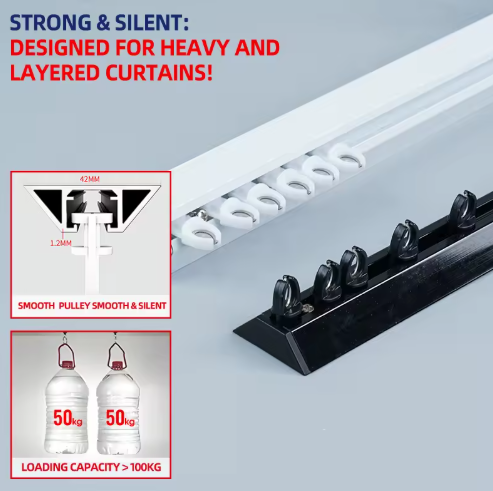
The Rise of Sustainable Aluminum
For years, aluminum has been the default choice for its strength and light weight. The new focus is on its origin. Specifying "recycled aluminum" is becoming a key criterion for hotel groups with public sustainability goals. It’s not just about the material itself; it’s about the story it tells.
- Recycled Content: We’re seeing more requests for tracks made with 70% or more post-consumer recycled aluminum. This significantly reduces the carbon footprint of the product.
- Low-VOC Finishes: The powder-coating process is also under scrutiny. Low-VOC (Volatile Organic Compound) finishes are becoming the standard to ensure better indoor air quality for guests.
High-Performance Polymers: More Than Just Plastic
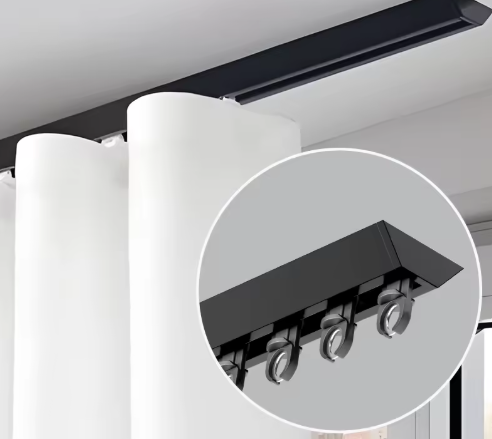
When we talk about polymers, we’re not talking about cheap, flimsy plastic. Modern engineering polymers like POM (Polyoxymethylene) are incredibly durable and have a low coefficient of friction. This makes them the perfect material for carriers in a silent-glide system. They move almost frictionlessly within the aluminum channel, eliminating the scraping sounds that older metal or low-grade plastic carriers used to make. They are essential for the near-silent operation that luxury smart systems demand.
Material Choices for Modern Hotels
| Feature | Recycled Aluminum Track | Advanced Polymer Components |
|---|---|---|
| Aesthetics | Excellent. Available in matte black, bronze, custom colors. | Functional. Primarily used for internal parts like carriers. |
| Sustainability | High. Uses significantly less energy than virgin aluminum. | Moderate. Durable and long-lasting, reducing replacement needs. |
| Noise Level | Good. The profile is rigid and stable. | Excellent. Crucial for creating a true "silent-glide" system. |
| Best For | Visible tracks where design and green credentials are key. | All high-performance manual and motorized track systems. |
How Are Hotels Integrating Silent-Glide Systems Into Modern Rooms?
You install a new motorized track system. It’s "smart," so it connects to the room’s tablet. But when the guest presses "Open," the motor makes a noticeable whir, and the carriers make a slight scratching sound as they move along the track. The technology works, but the noise cheapens the experience. It feels functional, not luxurious. Guests notice these small details, and that subtle sound can be the difference between a seamless luxury experience and a clunky one.
Hotels are integrating silent-glide systems by combining acoustically dampened motors with advanced track and carrier designs. The focus is a total system approach. This means using belt-driven motors that are virtually inaudible, pairing them with polymer-coated carriers that eliminate friction noise, and ensuring the entire system is integrated into the BMS. This allows automated actions, like closing curtains to block the sun, to happen completely unnoticed by the guest, preserving a tranquil and luxurious atmosphere.
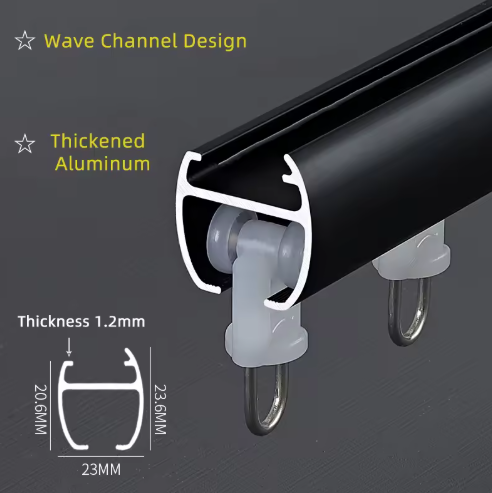
Beyond the Quiet Motor
A quiet motor is only half the battle. If the components moving inside the track are noisy, the system has failed.
- Belt-Driven vs. Gear-Driven Motors: The quietest motors use a smooth belt-drive system instead of a series of gears. This dramatically reduces the mechanical noise when the motor starts and stops.
- Carrier Material and Design: This is critical. We use POM carriers with an added silicone-based coating. They don’t roll; they glide. This is the secret to eliminating the scraping sound of plastic on aluminum.
- Acoustic Dampening: The motor housing and its connection to the bracket are also engineered to absorb vibration. This prevents the motor’s subtle vibrations from transferring into the wall or ceiling, which can amplify the sound.
Integration with the Guest Experience
True integration means the system is both smart and subtle. Imagine a west-facing room in the afternoon. The BMS knows the sun is intense. It quietly closes the sheer curtain to reduce solar heat gain without plunging the room into darkness. The guest, who may be working or relaxing, is never disturbed. The system works for them, in the background, without demanding their attention. That is the new standard of luxury.
What New Mounting Styles Are Trending for Luxury Hotel Renovations?
In a luxury renovation project, the design calls for a "clean, minimalist" look. The standard solution is to install a visible decorative track or rod. But the designer pushes back, saying, "I don’t want to see the hardware at all." Every visible bracket and end cap feels like a compromise to their vision of a seamless, uncluttered space. You’re left trying to find a solution that is both functional and completely invisible.
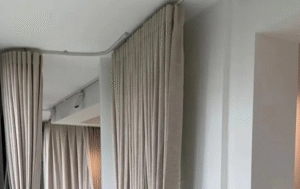
The top mounting trend for luxury hotels is the recessed or "ceiling-concealed" curtain track. This style involves creating a channel in the ceiling structure where the track is mounted. The result is a clean, architectural look where the curtain fabric appears to float, emerging directly from a crisp ceiling slot. This eliminates all visible hardware, integrating the window treatment into the room’s design in a seamless and sophisticated way that clients now expect in high-end properties.
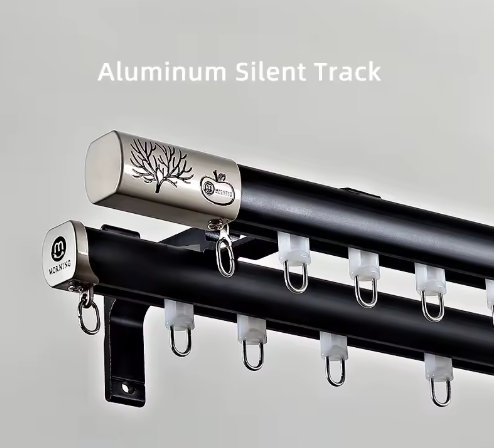
Achieving the Invisible Look
Making hardware disappear requires careful planning between the manufacturer, the architect, and the contractor.
- Recessed Channel Construction: This is done during the ceiling framing stage. A specific pocket or channel is built into the drywall. We provide the exact dimensions needed so the track fits perfectly.
- Specialized Recessed Tracks: We manufacture tracks with special flanges designed for this purpose. These flanges help the plasterers create a clean, sharp edge where the track meets the ceiling, so there are no messy gaps.
- Coordinating with Other Trades: This is where partnership is key. We often work directly with the project’s architect to ensure our track system integrates with lighting, sprinklers, and HVAC vents that might also be in the ceiling.
Wall-to-Wall vs. Floating Effect
Within the recessed style, there are two primary approaches:
- Wall-to-Wall: The ceiling channel runs the full length of the wall, creating a dramatic, expansive feeling. It makes the room feel wider and is perfect for windows that span an entire wall.
- Floating Effect: The channel is only slightly wider than the window itself. This creates a more focused, framed look, making the curtain appear like a deliberate, floating panel of fabric.
How Are Sustainability and Recyclable Materials Influencing Hotel Design?
A major hotel chain you work with just announced a new, aggressive ESG (Environmental, Social, and Governance) policy. Suddenly, every product you supply is under a microscope. Your standard curtain tracks, while functional, have no clear sustainability credentials. The procurement team is now asking for the recycled content percentage and the product’s end-of-life plan. You risk being disqualified from future projects if you can’t meet these new green requirements.
Sustainability is now a primary driver in material specification. Hotels are actively choosing recyclable materials like aluminum not just for its performance but for its closed-loop lifecycle. They are demanding products with high recycled content to lower their projects’ carbon footprint. Furthermore, they are looking for partners who design for disassembly, ensuring that at the end of its life, the entire track system can be easily separated into its base materials and fully recycled, preventing it from ending up in a landfill.
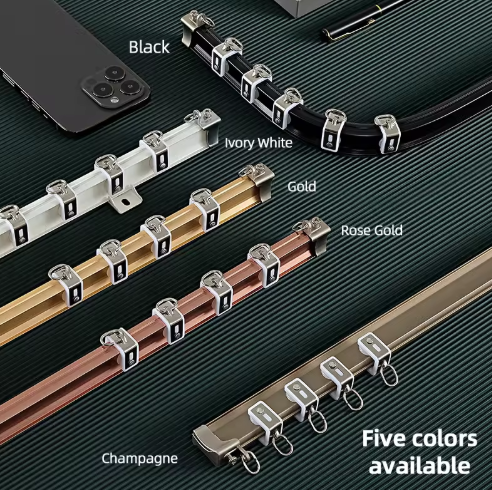
Beyond Recycled Content: The Full Lifecycle
A truly sustainable product is considered from beginning to end.
- Source of Materials: We are increasingly sourcing our aluminum from suppliers who can certify the percentage of recycled content. This data is passed on to the hotel for their own sustainability reporting.
- Manufacturing Process: Our own factory processes are designed to minimize waste. We recycle all our aluminum scrap, and we’ve invested in powder-coating systems that recapture and reuse overspray.
- Design for Disassembly: This is a newer concept that is gaining traction. We design our track systems so they can be taken apart easily with basic tools. The aluminum track, steel brackets, and polymer carriers can be separated into clean recycling streams. This contrasts with older products where components were glued or crimped together, making recycling impossible.
Sustainability as a Brand Standard
For global hotel brands, sustainability1 is no longer an option; it’s a core part of their identity. When they can tell their guests that everything from the carpets to the curtain tracks was sourced with the environment2 in mind, it strengthens their brand. As a manufacturer, our role is to provide them with products that help them tell that story authentically.
| Sustainability Factor | Traditional Approach | Modern Approach (2025) |
|---|---|---|
| Material | Virgin aluminum. | High-content recycled aluminum. |
| Lifecycle | Not considered. Product goes to landfill. | Designed for disassembly and full recyclability. |
| Finishes | Standard paints and coatings. | Low-VOC powder-coating to protect air quality. |
| Procurement Driver | Cost was the only factor. | Total environmental impact is a key factor. |
Conclusion
Looking toward 2025, the evolution of the hotel curtain track is clear. While aesthetic trends like minimalist mounting and sustainable materials are shaping the look and feel, the most profound change is invisible. The future is a smart, integrated system that actively contributes to the hotel’s operational efficiency and enhances the guest experience. As a procurement manager, the focus must shift from simply buying hardware to investing in an integrated technology asset. The right curtain track system is no longer just a window dressing; it’s a vital component of the modern, intelligent, and sustainable hotel.
Frequently Asked questions (FAQ)
1. What is a Building Management System (BMS), and why does it matter for curtains?
A BMS is the central computer system that controls a building’s functions like HVAC, lighting, and security. Integrating curtain tracks allows the BMS to automatically close curtains to block solar heat, reducing the load on the air conditioning and saving significant energy costs.
2. Is investing in a BMS-integrated system worth the higher initial cost?
Yes, for most new builds or major renovations, the ROI is clear. The energy savings from reduced HVAC usage can pay back the initial investment over a few years. It also elevates the guest experience, which is a key differentiator in the luxury market.
3. What makes a motorized system truly "silent"?
It’s a combination of three things: a quiet, belt-driven motor that eliminates gear noise; specially designed polymer carriers with a low-friction coating that glide instead of scrape; and acoustic dampening in the motor housing to prevent vibrations from transferring to the wall.
4. For recessed or ceiling-concealed tracks, how early do we need to plan for them?
You need to involve the track manufacturer during the architectural design and framing stage. The exact dimensions for the ceiling pocket must be planned before drywall is installed to ensure a clean, seamless fit.
5. How can I be sure the aluminum is actually "high-content recycled"?
Ask the manufacturer for a Material Content Certification. A reputable supplier should be able to provide documentation that verifies the percentage of post-consumer recycled material used in their aluminum extrusions.
6. Aren’t polymer carriers just plastic? Will they hold up to heavy hotel use?
We use high-grade engineering polymers like POM, not standard plastic. These materials are incredibly durable, self-lubricating, and resistant to UV degradation. They are specifically chosen for high-cycle applications and will often outlast lower-quality metal carriers.
7. Are modern finishes like matte black as durable as the classic white powder coat?
Yes, when done correctly. A high-quality, electrostatically applied powder coat offers exceptional durability, regardless of color. It is highly resistant to chipping, scratching, and fading, making it ideal for the demands of a hotel environment.
8. Can these smart, integrated systems be retrofitted into an existing hotel?
Yes, but it’s more complex. Wireless motor solutions (using protocols like Zigbee or Z-Wave) are often used for renovations as they don’t require running new control wires to a central panel. While not as deeply integrated as a wired KNX system, they still offer smart, localized control.
9. What does "design for disassembly" actually mean for a curtain track?
It means we use mechanical fastenings (like screws) instead of permanent bonds (like glue or crimping). At the end of the product’s long life, a maintenance team can easily separate the aluminum track, steel brackets, and polymer carriers for clean and efficient recycling.
10. Besides energy savings, what’s a direct benefit of a smart system for the guest?
It’s about effortless luxury. A guest can use a bedside tablet to open sheers and blackout curtains independently. The system can also be programmed for a "wake-up scene," where the curtains open gently to let in natural light at a pre-set time.