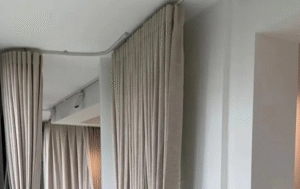
Your team just finished a 300-room hotel installation. The curtain tracks look great—strong, sturdy, and perfectly aligned. But two months later, the maintenance calls begin. Room 205 has a curtain that won’t close. A guest in Room 412 complains theirs is stuck open. The issue isn’t the track itself; it’s a tiny, broken plastic carrier. This small component failure is now causing guest dissatisfaction and creating an endless stream of work for the hotel’s limited maintenance staff, reflecting poorly on the entire project.
A proper curtain track installation is less about the brute strength of the aluminum track and more about focusing on the system’s true weak points: the carriers and end-stops. The key to durability is selecting components tested for high-cycle use, ensuring the mounting method is appropriate for the wall or ceiling structure, and understanding that a system is only as strong as its most abused, not its largest, component. Lasting performance comes from a focus on these operational details.
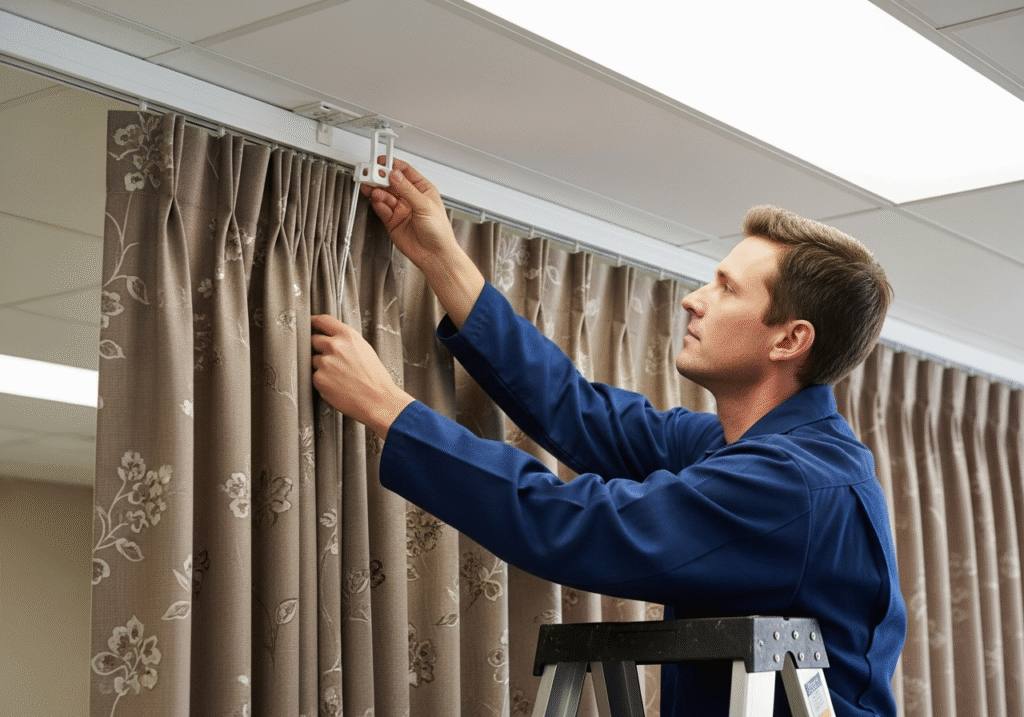
I learned this lesson the hard way early in my career. A major hotel client was fixated on the aluminum profile’s gauge for a new build. They wanted the thickest, heaviest track possible. We cautioned that the standard, budget-friendly plastic carriers they specified to save costs would be a problem. They insisted. Six months after opening, they called us. They were replacing broken carriers weekly. Guests were yanking the heavy blackout curtains, and the shock-loading was destroying the carriers. We ended up retrofitting all 500 rooms with our premium POM carriers. That project taught me that the customer experience doesn’t depend on the big track; it hangs on the smallest, most overlooked parts.
What Track Materials Deliver the Best Durability for High-Traffic Hotel Rooms?
You specified a strong, powder-coated aluminum track for a hotel project, confident in its longevity. Yet, you get reports of curtains snagging and sticking. On inspection, you see that while the track is fine, the plastic carriers inside have become brittle or warped, causing friction and failure. The choice of track material was solid, but ignoring the small components inside it has undermined the entire system’s performance and is leading to guest complaints about something as basic as opening their curtains.
For high-traffic hotel rooms, the best material is powder-coated or anodized aluminum for the track, paired with high-density POM (Polyoxymethylene) for the carriers. While the aluminum provides structural integrity and corrosion resistance, POM carriers offer superior lubricity, wear resistance, and strength to withstand the constant shock-loading from guests yanking heavy curtains. The system’s durability is defined by this crucial material combination.
Why Aluminum is the Standard
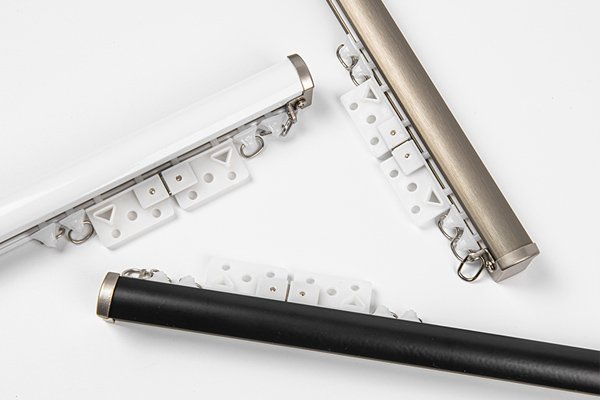
Aluminum is the ideal choice for hotel curtain tracks for several reasons. It is lightweight, which makes it easier and safer to install, especially in long runs. It is corrosion-resistant, a critical feature in humid climates or rooms with high condensation. Most importantly, it can be extruded into complex profiles that allow for smoother carrier channels and integrated design features. The finish, either powder coating or anodizing, adds another layer of protection and allows for color customization to match the room’s decor.
The Unsung Hero: POM Carriers
The track itself rarely fails. The real point of failure is the carrier that glides within it. Standard plastic or nylon carriers can become brittle over time, especially with UV exposure from windows. They can crack under the sudden force of a heavy curtain being yanked. POM is an engineering-grade thermoplastic that solves these problems. It has a naturally low coefficient of friction (meaning it’s very slippery), so it glides effortlessly without lubrication. It’s also incredibly tough and resistant to wear, making it perfect for the demands of a hotel environment.
Comparing Carrier Materials
A durable system is a sum of its parts. Focusing only on the metal track is a common purchasing mistake. The carriers are what do the work and take the abuse.
| Carrier Material | Pros | Cons | Best For |
|---|---|---|---|
| Standard Plastic (PP/PE) | Very low cost | Becomes brittle, high friction, cracks easily | Light domestic use, not for hotels |
| Nylon | Better than standard plastic, good strength | Can absorb moisture, higher friction than POM | Mid-range commercial applications |
| POM (Polyoxymethylene) | Extremely durable, low friction, silent glide | Higher initial cost | High-traffic hotel rooms, heavy curtains |
| Metal (Wheeled) | Very high load capacity | Can be noisy, may damage track if abused | Theatrical stages, specialty applications |
How Do You Choose the Right Load Capacity for Heavy Blackout Curtains?
A designer specifies beautiful, thick, interlined blackout drapes for a luxury suite. You check the specs and see the curtains weigh 30 pounds. You source a track rated for 40 pounds, thinking you have a safe margin. But you’ve only calculated the static weight. You haven’t accounted for a guest pulling all 30 pounds of fabric from a standstill with a sharp yank. That "shock load" can exert a force many times the static weight, snapping a carrier or pulling a bracket from the wall.
Choosing the right load capacity requires looking beyond the static weight of the curtains and considering the dynamic "shock load" created by forceful guest operation. The key is not just a strong track, but carriers and brackets cycle-tested to withstand repeated, high-impact pulls. As a rule of thumb, select a system whose components are proven to handle at least 3-4 times the curtain’s static weight in dynamic testing, focusing on the quality of the gliders and end-stops.

Understanding Static Weight vs. Dynamic Load
Static weight is the physically measured weight of the curtain when it is hanging still. A 10-foot wide blackout curtain might have a static weight of 25-35 pounds. This is the number most people use. However, the dynamic load, or shock load, is the force applied to the components when the curtain is pulled rapidly. This force can be immense, especially on the first carrier attached to the master arm and the end-stop. A weak carrier or a poorly secured bracket will fail here first.
Ask for Cycle-Testing Data
A track’s simple load rating is not enough. The most reliable manufacturers perform cycle testing on their components, especially the carriers. This involves a machine that opens and closes a weighted curtain thousands of times to simulate years of hotel use. Ask your supplier for this data. A carrier that survives 10,000 cycles with a weighted curtain is one you can trust. This is a far better indicator of real-world durability than a simple kilogram rating on a spec sheet.
Bracket Spacing is Critical
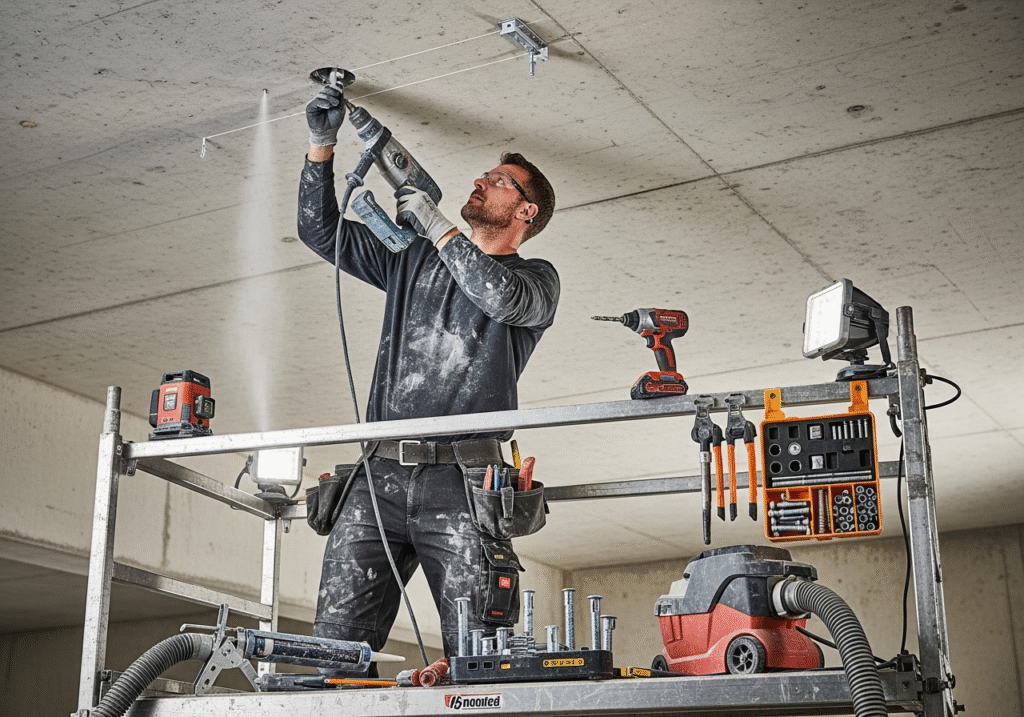
The track’s strength is irrelevant if the brackets holding it to the wall or ceiling fail. For heavy blackout curtains, bracket spacing is non-negotiable. Brackets should be installed closer together than for sheer or lightweight drapes. A good standard is to have a bracket within 4-6 inches of each end of the track and then spaced every 16-24 inches in between. Crucially, always try to align brackets with wall studs or ceiling joists for the most secure anchoring.
Which Mounting Method Works Best for Different Hotel Room Designs?
You’re sourcing for two hotel projects. One is an ultra-modern city hotel with minimalist aesthetics and floor-to-ceiling windows. The other is a classic, traditionally decorated resort. If you specify the same standard wall-mounted track for both, you’ll fail both designs. The wall track will clutter the minimalist room’s clean lines, and it might not provide the grand, luxurious feel the classic resort needs. A one-size-fits-all approach to mounting doesn’t work.
The best mounting method is dictated by the hotel’s design aesthetic and physical architecture. For modern, minimalist, or luxury designs, a ceiling-mounted track (especially recessed) is superior as it creates a seamless, floor-to-ceiling drape. For traditional rooms, rooms with structural ceiling obstructions, or projects with stricter budgets, a decorative wall-mounted track or rod is often the most practical and fitting choice.
Ceiling Mounts for Modern Luxury
Ceiling-mounted tracks are the go-to for contemporary design. They create an illusion of height and allow the curtains to become a true architectural element.
- Recessed Track: The track is hidden in a channel in the ceiling. The curtain appears to float down from a slot, offering the cleanest possible look. This requires planning during the construction phase.
- Surface-Mount Track: A slim track is mounted directly onto the ceiling surface. This is easier to retrofit and still provides a clean, floor-to-ceiling curtain effect. It’s an excellent choice for achieving a modern look without major construction.
Wall Mounts for Traditional and Practical Applications
Wall-mounted systems are versatile and often more straightforward to install, especially in existing buildings.
- Decorative Rods and Finials: In a traditionally designed room, a decorative wood or metal rod with ornate finials can be a design feature in itself, complementing the furniture and decor.
- Basic Wall Track: In budget-conscious projects or in rooms where the ceiling is inaccessible (due to concrete or packed utilities), a simple wall-mounted track positioned high and wide above the window is a functional and effective workhorse solution.
Solving for Architectural Challenges
Sometimes, the building’s structure makes the decision for you. You might find a large HVAC soffit or a concrete beam right above the window, making a ceiling mount impossible. In these cases, a wall-mounted track is the only option. The key is to identify these constraints early in the site survey process to avoid wasted time and materials.
How Can Smooth, Silent Gliding Improve Guest Experience Scores?
A guest arrives in their room late at night, tired after a long flight. They go to close the blackout curtains and are met with a loud, scraping plastic-on-metal sound. The curtain jerks and snags along the track. This grating, frustrating experience is one of the first physical interactions they have with the room. It instantly communicates a lack of quality and attention to detail, setting a negative tone for their stay before they’ve even unpacked.
A smooth, silent curtain track directly improves guest experience scores by contributing to an atmosphere of effortless luxury and quality. The silent glide of a well-engineered track is a subtle but powerful signal that the hotel has invested in every detail of guest comfort. It removes a common point of friction and frustration, ensuring the operation of the room’s features is seamless, quiet, and user-friendly, which guests subconsciously register as positive quality.

The Psychology of Sound
In a hotel room, unexpected sounds are perceived negatively. The scrape of a cheap curtain track, the squeak of a door, the rattle of an AC unit—these noises cheapen the experience. Conversely, silence and smoothness signal quality and precision engineering. When a guest pulls a heavy curtain and it glides open with a whisper-quiet whoosh, it creates a moment of satisfying, seamless interaction. This small detail reinforces the premium value of the room.
Key Components for a Silent Glide
The secret to a silent glide isn’t a lubricant spray; it’s the quality of the core components.
- POM or Ball-Bearing Carriers: As discussed, POM carriers have a natural lubricity that guarantees a smooth, quiet glide. For the ultimate in luxury performance, ball-bearing carriers contain tiny steel balls that allow them to roll, not slide, along the track, offering the most effortless motion possible.
- Clean Track Channels: The internal profile of the track must be smooth and free of imperfections from the extrusion process. A high-quality track has a perfectly smooth channel for the carriers to move in.
- Master Carriers: The lead carrier that pulls the curtain open and closed should also be robust and well-designed to handle the initial force without jamming or making noise.
The Impact on Guest Reviews
Guests may not write a review saying, "The curtain track was wonderfully silent." But they will write reviews complaining about things that don’t work. "Curtains were hard to close," or "the room felt cheap." Preventing these negative comments is a huge part of maintaining high guest satisfaction scores1. Investing in a silent, smooth-gliding track system2 is a proactive investment in positive guest experiences and better reviews.
Conclusion
Installing a curtain track in a hotel room that will stand the test of time goes far beyond simply screwing a piece of aluminum to the wall. It requires a manufacturer’s perspective: an understanding that true durability lies not in the track, but in the small, hard-working carriers that endure thousands of forceful pulls. By focusing on cycle-tested components, matching the load capacity to dynamic forces, and choosing a mounting style that fits the design, you ensure the system functions flawlessly. This attention to detail protects your investment, minimizes maintenance costs, and delivers the quiet, effortless quality that guests notice.
Frequently Asked Questions (FAQ)
1. How far apart should I install the brackets for a heavy hotel curtain?
For heavy blackout curtains, place a bracket 4-6 inches from each end, and then space the remaining brackets every 16-24 inches. Whenever possible, anchor brackets directly into wall studs or ceiling joists for maximum strength.
2. What are the essential tools needed for a typical hotel curtain track installation?
You will need a power drill, a quality set of drill bits (including masonry bits for concrete), a level, a measuring tape, a pencil, and a stud finder. Depending on the anchor type, a socket wrench may also be useful.
3. Can you cut a curtain track to a custom length on-site?
Yes, aluminum curtain tracks can be easily cut to size on-site using a hacksaw with a fine-tooth blade. After cutting, it’s important to file the end smooth to remove any burrs that could snag the carriers.
4. What is a "master carrier" and why is it important?
A master carrier is a specialized, often larger carrier that connects the two sides of a center-draw curtain, allowing them to overlap when closed to block light. It’s a critical component as it takes the initial force of every pull, so a durable, well-designed master carrier is essential.
5. How do you maintain curtain tracks to ensure a long life?
Periodically, the track channel should be wiped clean with a dry or lightly damp cloth to remove any dust or debris that could impede the carriers. Avoid oil-based lubricants, as they can attract dust and gum up the system. If using high-quality POM carriers, no lubrication is needed.
6. What should I consider when choosing a track for a motorized system?
Compatibility is everything. Not all tracks can be motorized. You need a track profile specifically designed to accommodate a motor’s drive belt. It’s far more effective to select an integrated system where the motor and track are designed to work together from the start. Planning for motorization upfront is crucial, as retrofitting a manual track is often difficult and expensive.
7. Can aluminum tracks be bent to fit curved or bay windows?
Yes, most of our aluminum tracks can be custom-curved to precise specifications for bay windows or arched walls. This process, known as "custom bending," must be done by the manufacturer with specialized equipment to ensure a smooth and consistent radius. Trying to bend a track on-site without the proper tools will kink the metal, making it unusable.
8. You mentioned carriers are the weak link. What are the visible signs of a low-quality carrier?
A low-quality carrier often looks and feels cheap. You might see rough seams or flashing from the plastic molding process. The plastic itself might appear thin or brittle. A superior POM carrier, in contrast, feels dense, heavy for its size, and has a smooth, almost waxy surface that signifies its low-friction properties. The difference in durability is immediate.
9. What is the best practice for installing a double track system for sheers and blackouts?
The best method is to use a dedicated double-track bracket, which holds both tracks securely on a single mounting point. The track for the heavier blackout curtain should be installed closer to the room, with the sheer track behind it, closer to the window. You must ensure there’s enough space between the two tracks—typically 2 to 3 inches—to allow both curtains to move easily without snagging.
10. How does a wand-control (baton) system improve the longevity of the installation?
Using a wand, or baton, to open and close curtains dramatically increases the lifespan of the carriers. It distributes the pulling force evenly across the master carrier and prevents guests from yanking on the fabric itself. This eliminates the shock-loading and off-angle stress that cause carriers to break and stops hand oils and dirt from soiling the curtain edge, keeping it clean for longer.