As a purchasing manager, you receive a specification from an architect for a new five-star hotel project. You expect to see familiar terms like load capacity and aluminum grade. Instead, you find notes about the "acoustic signature" of the glider and demands for a "proprietary dry-lubricant coating." It feels abstract and overly complex. You’re left wondering if you’re sourcing a curtain track or a component for a recording studio, and this disconnect could lead to sourcing a product that gets rejected, causing costly delays.
Architects specify curtain tracks for luxury hotels by focusing on engineering a nearly imperceptible sensory experience, primarily silence. They scrutinize the coefficient of friction between the glider and the track, demanding advanced materials like silicone-injected polymers and specialized interior coatings. This meticulous focus ensures that when heavy, multi-layered drapery moves, it does so with a truly silent glide. This protects the acoustic integrity of the room and is fundamental to delivering a five-star guest experience.
I learned this firsthand years ago when working with an architect for a beachfront resort. We sent a sample of our heavy-duty motorized track, a product that had never failed and could handle immense weight. He called me a day later to reject it. I was shocked and asked if there was a problem with the motor or the track’s strength. "No," he said calmly. "The track is strong. But it isn’t quiet. I need to engineer silence for my guests." That conversation changed how I view our products. We aren’t just selling hardware; we are providing a component for a carefully designed experience. Understanding that perspective is key.
What Technical Criteria Do Architects Use When Selecting Hotel Curtain Tracks?
You’re reviewing a comparative spec sheet, and one track is rated for 30kg while another is rated for 25kg. The choice seems obvious—stronger is better, right? But the architect has flagged the 25kg track as their preferred option. You dig deeper into the specs and see phrases like "extrusion tolerance of ±0.2mm" and "silicone-injected polymer carrier." You’re worried that advocating for the stronger, simpler track will make you look like you’re missing the point.
Architects select hotel curtain tracks based on technical criteria that ensure silent, smooth functionality and seamless visual integration. Their primary focus is on a low coefficient of friction, which dictates the sound and effort of the curtain’s movement. They also specify precise profile dimensions for perfect concealment in ceiling pockets, material composition of gliders for durability, and the quality of the finish to match other high-end fixtures in the room.
Coefficient of Friction: The Science of Silence
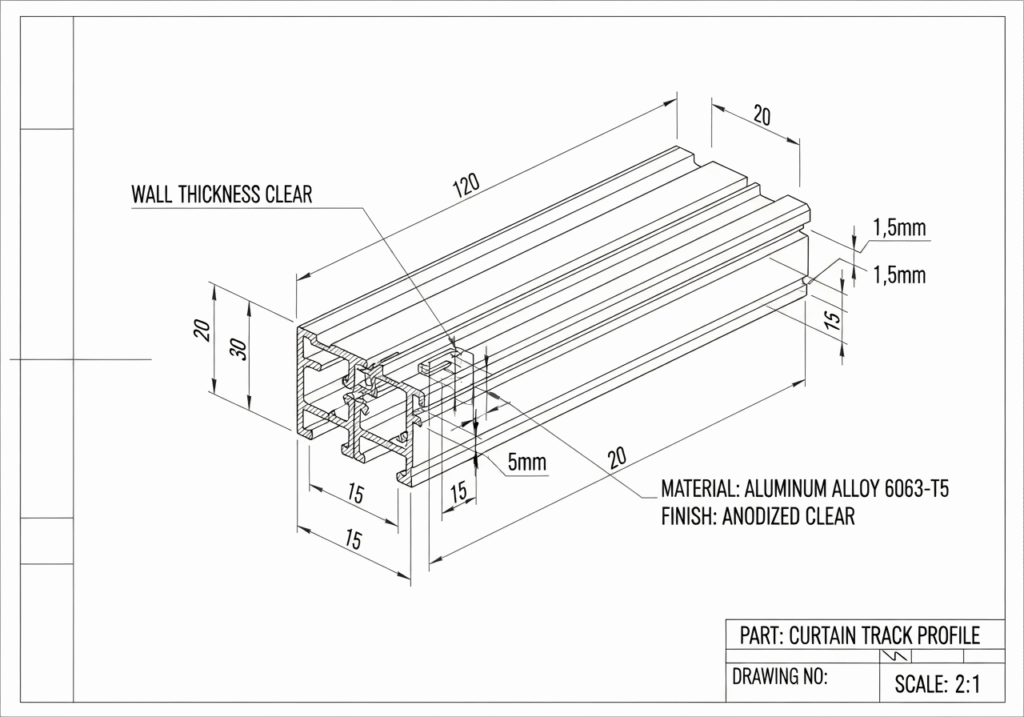
This is the most critical, yet often overlooked, technical specification. It measures the resistance between the glider and the track’s interior surface. A high coefficient means more friction, which translates to a grating noise and increased strain on the motor. A low coefficient ensures a whisper-quiet glide. Architects know that the true mark of luxury is what you don’t hear. They specify systems where the carrier material (like a self-lubricating polymer) works in harmony with a smooth, coated track interior to minimize this friction.
Profile Extrusion Tolerances
An architect planning a recessed track needs to know the exact dimensions of the profile. A specification like "extrusion tolerance of ±0.2mm" guarantees uniformity. It means the pocket they design in the ceiling will be a perfect fit, with no unsightly gaps or installation issues. This level of precision ensures the track disappears into the architecture, contributing to a clean, minimalist aesthetic.
Material Composition and Finish
Architects specify not just "plastic gliders" but the type of polymer, looking for materials resistant to UV degradation and brittleness over time. The track’s exterior finish is also scrutinized. It must match other metallic elements in the room, so specifications will often include a precise color code (e.g., RAL 9016) and a minimum coating thickness (e.g., 80 microns) to ensure durability and a perfect visual match.
| Technical Criterion | Architect’s Priority | Why It Matters for Luxury |
|---|---|---|
| Coefficient of Friction | Silent, effortless glide. | Protects the room’s acoustic environment. |
| Profile Tolerances | Precise, consistent dimensions. | Allows for seamless architectural integration. |
| Glider Material | UV-stable, durable polymer. | Ensures long-term smooth operation and reliability. |
| Finish Quality | Color consistency and durability. | Matches other high-end fixtures and hardware. |
How Do You Ensure Track Compatibility with High-End Drapery Systems?
An architect has specified a complex, multi-layered drapery system: a front layer of heavy decorative velvet, a middle layer of acoustic-lined blackout fabric, and a back layer of sheer voile. All three need to operate independently on a single motorized headrail. You know that if the track, motors, and drapery headings aren’t perfectly compatible, the system will jam, the motors will strain, and the perfect "S-curve" of the ripplefold will be ruined.
Ensuring compatibility requires a holistic approach that goes beyond the track itself. You must verify that the track’s profile can accommodate the multiple carriers required. Next, ensure the motorized system has sufficient torque for the combined dynamic load. Finally, confirm the specific carriers are designed for the high-end heading styles, such as ripplefold, to maintain the drapery’s intended aesthetic. It’s about ensuring all parts of the system work in perfect synergy.

Multi-Track and Multi-Channel Profiles
For layered drapery, architects will specify either multiple single tracks installed in parallel or a single, larger headrail profile with multiple channels. The choice depends on the space available in the ceiling pocket. The specification must confirm that the spacing between channels is adequate to prevent the different fabric layers from touching or snagging on one another.
Motor Torque and Dynamic Load
High-end drapery is heavy, especially with acoustic lining. The "dynamic load" is the force required to put this weight in motion. Architects will calculate the total fabric weight and specify a motor with sufficient torque to handle it effortlessly. A motor that is undersized will be noisy, slow, and prone to premature failure. The track system must be rated to handle both the weight and the forces exerted by a powerful motor.
Heading System Compatibility
Luxury hotels frequently use ripplefold (or S-fold) headings for their clean, uniform waves. This style requires a specific carrier system where the gliders are connected by a cord at a fixed spacing. It is crucial to ensure the track is equipped with these specific ripplefold carriers, and that the "fullness" (the ratio of fabric to track width) is matched to the architect’s design for a perfect, consistent aesthetic.
What Fire-Rated and Noise-Reduction Standards Do Architects Demand?
You’re bidding on a project for a hotel in a major city center. The architect’s specification includes requirements like "NFPA 701 Flame Certification" for all plastic components and a specific "Sound Transmission Class (STC)" rating for the fully dressed window. You realize this project has strict safety and acoustic performance standards. Simply providing a standard aluminum track won’t be enough; you need to prove your components meet these certified codes.
Architects in commercial projects, especially high-rise hotels, must adhere to strict building and safety codes. They demand that curtain track components, particularly plastic gliders and end caps, meet fire-retardancy standards like NFPA 701. Furthermore, in luxury environments, they specify materials and systems that contribute to the overall noise-reduction goals of the room, often measured by an STC rating, to insulate guests from exterior noise.

Fire-Retardancy Standards
In the event of a fire, every component in a room is a potential source of fuel. Building codes mandate that materials used in public spaces must be flame-retardant. For curtain tracks, this applies to any plastic or polymer parts, such as gliders, carriers, and end caps. Architects will require documentation or certification proving these components pass tests like NFPA 701 (common in the USA) or BS 5867 (UK), which ensure the material will self-extinguish when a flame is removed.
Acoustic Performance and STC Ratings
A key feature of a luxury hotel room is its tranquility. Architects design a building envelope to block outside noise, and the window is often the weakest point. They specify heavy, acoustically lined curtains to help, but the entire system must be effective. While a curtain track itself doesn’t have an STC rating, it is a critical component of the window treatment system that does. A track that allows curtains to hang flush against the wall with good overlaps helps to create a better seal against sound.
Material Integrity and Certification
To meet these standards, architects don’t just take a supplier’s word for it. They will require official documentation and third-party test reports. Sourcing from a manufacturer who proactively tests and certifies their components makes the approval process much smoother. It shows a commitment to safety and performance that aligns with the architect’s professional responsibilities.
How Can Architects and Suppliers Collaborate During the Design Stage?
An architect sends you an early-stage concept drawing. It shows a curved wall of glass with a ceiling pocket that follows the curve, but there are no detailed specifications. As a supplier, you could wait for the final, detailed drawings. However, this often leads to problems when the architect’s design is not feasible with standard products, forcing last-minute compromises. There is a far better way to work.
The most successful luxury hotel projects are born from early collaboration between architects and suppliers. By engaging during the design and planning stage, suppliers can provide technical expertise that makes the architect’s vision a reality. This partnership involves providing technical drawings and samples, advising on the feasibility of complex designs like curves or motorization, and developing custom solutions when standard products fall short.

Providing Technical Data and CAD Files
In the early design phase, architects need precise technical information. A proactive supplier can provide a library of CAD files for their track profiles. This allows the architect to simply drop the exact profile into their master drawings, ensuring that details like ceiling pocket dimensions are correct from the very beginning. This simple step can prevent significant and costly rework later on.
Advising on Complex Applications
Architects often push the boundaries of design with features like tightly curved windows, extra-long continuous tracks, or complex multi-layered motorized systems. An experienced supplier can act as a consultant, reviewing these designs and advising on their feasibility. For example, they can confirm the minimum bending radius for a specific track profile or calculate the number of motors needed for an exceptionally wide window, ensuring the design is both beautiful and functional.
Developing Custom Solutions
Sometimes, an architect’s vision cannot be achieved with off-the-shelf products. This is where a true partnership shines. A collaborative supplier1 can work with the architect to design custom components2, such as a unique bracket, a specially colored finish, or even a new track profile. This level of collaboration elevates the supplier from a mere vendor to an essential partner in bringing a unique and luxurious design to life.
Conclusion
When architects specify curtain tracks for luxury hotels, they are designing an experience, not just selecting hardware. Their focus on silence, seamless integration, and safety standards requires a deeper level of technical understanding. As a procurement manager, seeing the specification through their eyes—prioritizing the coefficient of friction over simple strength, ensuring heading compatibility, and meeting fire codes—allows you to source not just a compliant product, but the right product. By collaborating early and speaking their language of precision and performance, you become an invaluable part of creating the five-star experience every guest deserves.
Frequently Asked Questions (FAQ)
1. What is the most important specification an architect looks for in a luxury hotel curtain track?
The most critical specification is a low coefficient of friction, which ensures the silent, smooth glide essential to the luxury guest experience. This is achieved through the combination of advanced glider materials and specialized track coatings.
2. Why is the extrusion tolerance of a curtain track profile important to architects?
Precise extrusion tolerances (e.g., ±0.2mm) guarantee that the track’s dimensions are consistent. This allows architects to design perfectly-sized recessed ceiling pockets for seamless, a "disappearing track" look without unsightly gaps.
3. What is NFPA 701 and why does it apply to curtain tracks?
NFPA 701 is a fire-retardancy standard. It applies to the plastic and polymer components of a curtain track system, such as gliders and end caps, to ensure they will self-extinguish and not contribute to the spread of a fire in a commercial space like a hotel.
4. How does a curtain track contribute to a room’s noise reduction (STC rating)?
While the track itself is not rated, its design is crucial. Tracks that allow curtains—especially acoustic-lined ones—to hang flush with the wall and have returns and overlaps help create a better seal around the window, improving the overall STC rating of the window unit by blocking sound paths.
5. What is the best way for a supplier to work with an architect on a hotel project?
The best approach is early collaboration. By providing technical data, CAD files, and expert advice on complex designs during the initial planning stage, suppliers can help ensure the architect’s vision is both feasible and functional, preventing costly changes later.