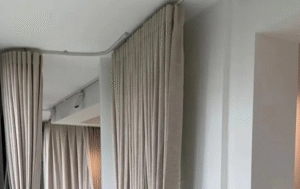
As a purchasing manager, you see the drawings from the designer. They show elegant, ceiling-mounted curtain tracks for a seamless floor-to-ceiling look. It seems like a simple aesthetic choice. You source the perfect track, it ships to the site, and then the call comes. The installer has hit a massive HVAC duct running right along the window. Now, the entire plan is in jeopardy, forcing last-minute changes, costly workarounds, and project delays. That simple design choice has just collided with the complex reality of modern construction.
The decision between wall-mounted and ceiling-mounted tracks is less about aesthetics and more about a hidden battle for space. The "ceiling plenum"—the area above the finished ceiling—is packed with HVAC, fire sprinklers, and electrical systems. The best choice is often a pragmatic, engineering-driven compromise based on the building’s infrastructure, a reality that is discovered on-site, not in a design studio.
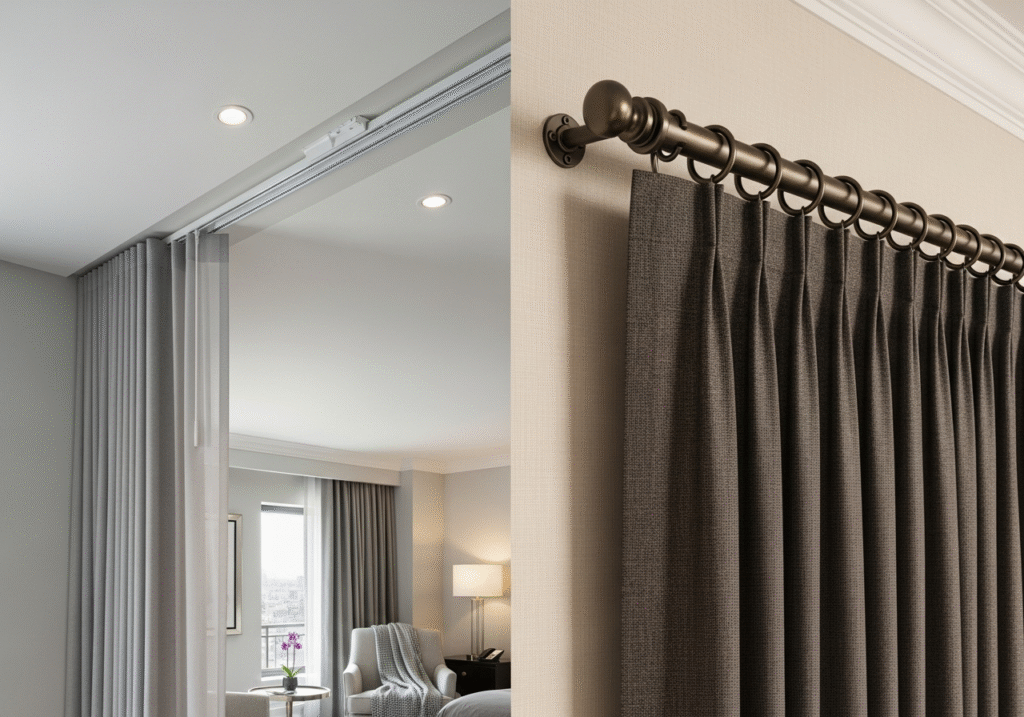
I’ll never forget a project for a new-build luxury hotel in Chicago. The plans were beautiful, specifying recessed ceiling tracks in all 300 rooms. We manufactured and shipped them according to the construction schedule. Halfway through the installation, work ground to a halt. In over 50 rooms, the sprinkler lines were installed just centimeters from the window wall, exactly where our tracks were meant to go. We had to rush-produce custom wall-mounted brackets as a solution. That experience taught me that the most important space to consider isn’t in the room; it’s the crowded, invisible space above it.
Which Mounting Type Offers Better Acoustic and Light Control?
You’ve invested in premium blackout curtains to guarantee guests a perfect night’s sleep. But the reviews still mention light leaking in. The problem isn’t the fabric; it’s the gap of light bleeding over the top of the wall-mounted curtain rod. That small, overlooked detail is undermining the entire investment in guest comfort and leading to negative feedback. The promise of a dark, quiet room is broken by a simple mounting choice.
For superior acoustic and light control, ceiling-mounted tracks are almost always the better option. By allowing the curtain to hang from the ceiling deck to the floor, they create a continuous barrier that eliminates the "light gap" common with wall-mounted tracks. This complete seal not only blocks more light but also helps dampen outside noise more effectively, creating a darker, quieter, and more restful environment for guests.
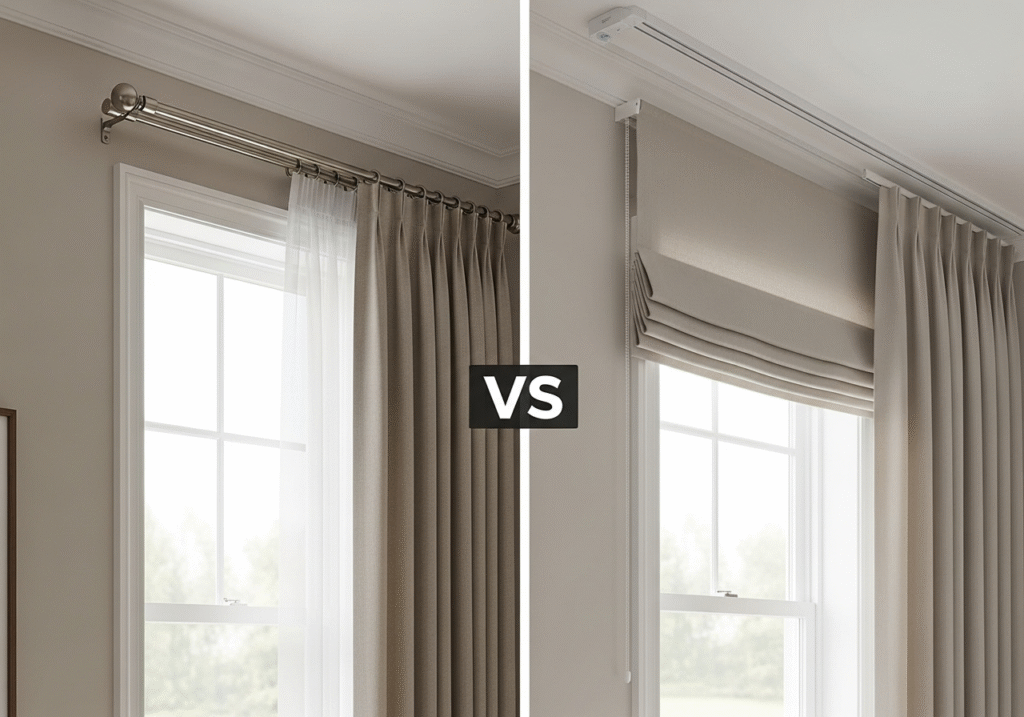
Eliminating the "Top Light Gap"
The single biggest weakness of a wall-mounted system is the space between the rod and the ceiling. Light from outside can easily spill over the top, creating what is often called a "halo effect" or "light gap." In a hotel room designed for sleep, this is a significant flaw. A ceiling-mounted track, by its very nature, starts at the ceiling line, allowing the curtain heading to press against it and create a near-perfect seal against light.
Creating an Acoustic Barrier
The same principle applies to sound. Sound waves travel through gaps. The floor-to-ceiling coverage provided by a ceiling-mounted system turns the curtain into a more effective acoustic baffle. It helps to absorb and block more sound from the window, a critical feature for hotels located in busy urban areas. While the fabric itself does most of the work, the mounting style maximizes its potential.
The Role of Returns and Fabric
While the mounting choice is foundational, other elements are needed to perfect the system. Regardless of whether you choose wall or ceiling mounting, you should always use "returns"—small, curved pieces of track at the ends that allow the curtain to wrap back to the wall. This closes the light gaps on the sides. Combining a ceiling track with returns and a high-quality, heavy blackout fabric creates the ultimate system for light and noise control.
| Feature | Ceiling-Mounted Track | Wall-Mounted Track |
|---|---|---|
| Top Light Control | Excellent (No gap) | Fair (Gap is possible) |
| Acoustic Damping | Very Good | Good |
| Side Light Control | Excellent (with returns) | Excellent (with returns) |
| Overall Seal | Superior | Standard |
What Are the Installation Challenges in Different Ceiling Materials?
The project calls for ceiling-mounted tracks, and you’ve ordered a standard set of hardware with drywall anchors. The installers get to the site and find that the main suites have concrete ceilings, while the corridors feature a suspended T-bar ceiling. Your standard anchors are useless on the concrete, and there’s no proper support in place for the T-bar grid. The installation stops, and now you have to quickly source new, specialized hardware to avoid holding up the entire project.
Installation challenges are defined by the ceiling material. While drywall is straightforward, concrete ceilings require heavy-duty anchors and specialized tools, increasing labor time. Suspended or "drop" ceilings offer the greatest challenge, as tracks cannot be mounted directly to the acoustic tiles and require independent support points or direct attachment to the metal grid, which must be planned in advance.
Mounting into Drywall or Plaster
This is the most common and simplest scenario. Standard toggle bolts or screw-in anchors can typically provide enough support for most curtain weights. The main consideration is locating the ceiling joists. Whenever possible, anchoring directly into a joist provides the strongest possible hold. A good installer will use a stud finder to map the joists before drilling.
Dealing with Concrete Ceilings
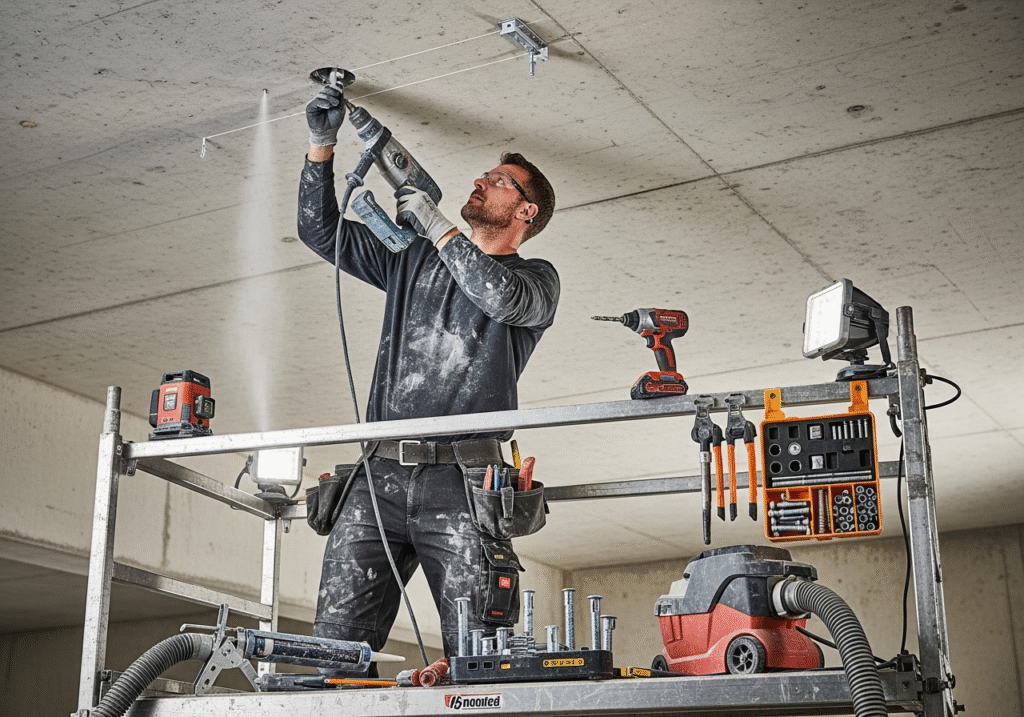
Concrete presents a much tougher challenge. It requires a hammer drill to create the pilot holes and specialized concrete anchors or wedge anchors for a secure fit. This process is slower, louder, and requires more skill and strength from the installer. The cost of labor for a concrete ceiling installation will almost always be higher than for drywall. As a purchasing manager, you need to account for this in the budget.
Suspended ceilings are common in commercial spaces and some hotel common areas. You can never mount a curtain track directly to the fragile acoustic tiles. The track must be attached to the metal T-bar grid that supports the tiles. For heavier curtains, the grid itself may need to be reinforced with extra support wires going up to the structural ceiling deck above. This requires coordination with the contractors who installed the ceiling.
What Are the Maintenance and Accessibility Considerations for Each Option?
A hotel guest yanks a heavy blackout curtain too hard, and a carrier pops out of the wall-mounted track. The maintenance team needs to get on a ladder, unhook the entire curtain, feed the carrier back in from the end, and re-hang the heavy panel. This simple repair takes one person 30 minutes. In a 400-room hotel, these small issues add up to significant labor costs over the course of a year, impacting the operational budget.
From a maintenance perspective, wall-mounted tracks often offer slightly easier accessibility because they are not tucked into recessed coves or against the ceiling. However, ceiling-mounted tracks, particularly high-quality systems, often have more durable components designed for heavy use, potentially leading to fewer repairs over time. The key is to choose a system where carriers can be easily added or replaced without taking the entire track down.
Access for Repairs
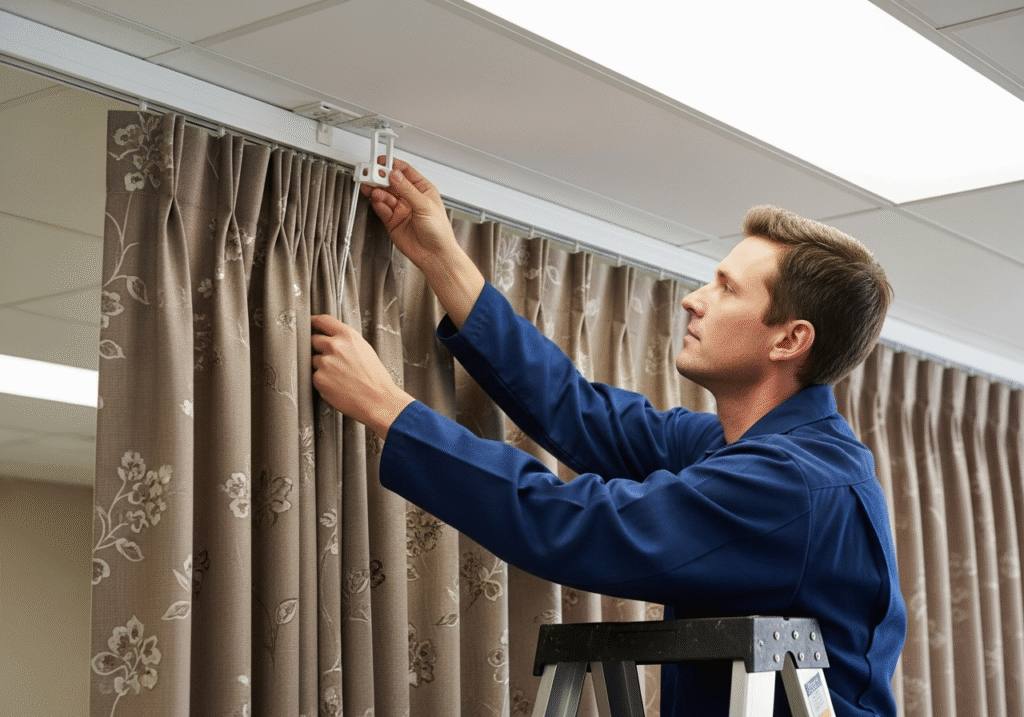
If a track is mounted directly on a flat ceiling, access is straightforward. The challenge comes when ceiling tracks are mounted inside architectural pockets or coves. While this looks clean, it can make it very difficult for a maintenance worker to get their hands and tools into the narrow space to fix a broken carrier or end stop. Wall-mounted tracks are generally more exposed and easier to work on.
The Importance of Replaceable Components
The best track systems, whether wall- or ceiling-mounted, are designed for easy maintenance. Look for tracks that allow you to snap in or remove carriers from the middle of the track, rather than having to slide them all off from one end. This one feature can turn a 30-minute repair job into a 2-minute one. It’s a small detail in the product spec that has a huge impact on long-term operational costs.
Durability and Proactive Checks
Ultimately, the best maintenance strategy is to minimize the need for it. A robust, heavy-duty track with high-quality, ball-bearing carriers will withstand the rigors of hotel use far better than a residential-grade product. Regular checks by housekeeping to ensure tracks are clean and gliders are moving smoothly can help identify small issues before they become bigger problems that require a maintenance call.
How Does Mounting Choice Shape Guest Perception?
Imagine a guest walking into two different hotel suites. In one, a standard wall-mounted rod sits a few inches above the window. It looks fine, but familiar. In the other, the curtains cascade in an unbroken line from a hidden slot in the ceiling. The window feels taller, the room feels grander, and the whole effect is one of seamless, intentional luxury. The guest may not consciously notice the curtain track, but they feel the difference in the room’s ambition and quality.
The mounting choice profoundly shapes guest perception by signaling the level of design detail. A ceiling-mounted track, especially when recessed, creates a sense of height, luxury, and modernism. It makes the window a true architectural feature. A wall-mounted track is more traditional and can look cluttered in a minimalist space. The ceiling mount implies a custom, built-in solution, elevating the room from "decorated" to "designed."

Creating the Illusion of Height
One of the most powerful effects of a ceiling-mounted track is that it draws the eye upward, making ceilings feel higher and the entire space feel larger. Mounting a curtain just below the ceiling line, instead of just above the window frame, can visually add a foot or more to the room’s height. This contributes to a feeling of openness and grandeur that guests associate with luxury.
Seamless and Uncluttered Aesthetics
Modern luxury design is often about removing visual clutter. A recessed ceiling track achieves this perfectly by hiding the hardware completely. The curtains appear to emerge directly from the architecture itself. This clean, minimalist look is highly desirable and communicates a sophisticated, high-end aesthetic. It allows the fabric and the view outside to be the stars, not the hardware holding it all up.
The Signal of Customization
While a wall-mounted rod can be bought off the shelf, a perfectly integrated ceiling track1 feels like a custom solution. It signals to the guest that the room was not just assembled but carefully designed and constructed. This perception of bespoke quality and attention to every detail is a core component of a luxury brand’s identity2. It’s a subtle cue that reinforces the value and premium nature of the property.
Conclusion
The debate between wall-mounted and ceiling-mounted tracks is not simply a matter of style. It’s a critical decision that balances aesthetic ambition with the practical realities of a building’s infrastructure. While ceiling mounts often deliver a more premium look with superior light and sound control, their success depends entirely on early-stage coordination to navigate the crowded ceiling plenum. As manufacturers and suppliers, our role is to help you bridge that gap between the designer’s vision and the contractor’s reality, ensuring the final choice is not only beautiful but, most importantly, buildable.
Frequently Asked Questions (FAQ)
1. Is a ceiling-mounted track always better than a wall-mounted one?
Not always. While ceiling-mounted tracks offer superior light control and a more modern aesthetic, their installation can be blocked by HVAC, pipes, or sprinklers in the ceiling. In such cases, a high-quality wall-mounted track is a more practical and effective solution.
2. Can you install a ceiling track on a slanted or vaulted ceiling?
Yes, it is possible but requires specialized hardware. The track itself is typically mounted using custom-angled brackets or suspension kits to ensure it remains level, allowing the curtains to hang properly.
3. What is the most common reason a specified ceiling track cannot be installed?
The most common reason is unforeseen obstruction in the ceiling plenum. This includes HVAC ductwork, sprinkler systems, electrical conduits, or structural beams located exactly where the track is planned to go.
4. How much weight can a ceiling-mounted track hold?
This depends entirely on the track’s profile, the ceiling material, and the anchors used. A heavy-duty track anchored directly into concrete or wooden ceiling joists can hold extremely heavy curtains, while a track mounted into drywall with standard anchors has a much lower weight capacity.
5. From a cost perspective, which is more expensive to install?
Generally, a ceiling-mounted track is more expensive to install. The cost increases significantly if the ceiling is concrete, if it requires working around obstructions, or if a recessed pocket needs to be specially constructed. A standard wall-mounted installation is typically faster and requires less specialized labor.