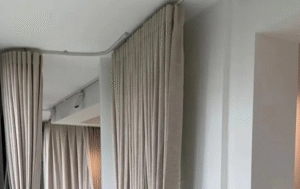
As a procurement manager for a hotel group, you are responsible for thousands of details. The curtain track seems like a small part of a huge project. Yet, a bad choice here echoes loudly. You worry about a guest’s first impression being ruined by a curtain that sticks, squeaks, or jams. This single touchpoint can lead to frustrated complaints, negative online reviews, and constant calls to your maintenance team, all reflecting on your sourcing decisions.
To choose the best hotel curtain tracks, you must look beyond the static aluminum profile and focus on the entire system’s performance. The most critical specifications involve the dynamic components: the carriers. Opting for superior wheeled or ball-bearing carriers over basic plastic slides is essential. This ensures a smooth, silent glide that enhances the guest experience, protects expensive drapery from damage, and drastically reduces long-term maintenance costs, providing a far greater return on investment.

I’ve spent my life on the factory floor, and I see the specification sheets that cross my desk every day. Managers meticulously detail the aluminum grade and the powder-coat finish, believing this is the key to durability. They are focusing on the part of the system that rarely fails. The track itself is a static piece of metal; it has a very long life. The real performance, the part the guest actually touches and feels, comes from the carriers moving inside. Time and again, I see projects try to save a few cents per unit by choosing simple plastic carriers. This is a huge mistake. It ignores the fact that a sticking curtain is a major source of guest frustration and leads to far more expensive maintenance problems down the road.
What are the key specifications you should really check when sourcing hotel curtain tracks?
Your sourcing checklist is thorough. It covers track material, dimensions, and finish. You’ve done your due diligence. But then reports come back from hotel managers about guests yanking on stuck curtains and maintenance teams constantly replacing broken parts. It is frustrating to realize that even with a detailed spec sheet, the product is not performing as expected. The problem is not what you specified, but the small, critical details you might have missed.
Beyond the track’s material, the most crucial specifications to check are the carrier type, mounting hardware, and system weight capacity. You must insist on wheeled or ball-bearing carriers for a smooth, silent guest experience. The mounting brackets and end stops must be robust and engineered for the specific wall structure and curtain weight. These functional components, not just the aluminum profile, are what truly define a system’s quality and longevity in a high-use hotel environment.

The Carrier: Your System’s Engine
The single most important component for performance is the carrier. This is what the guest interacts with. A bad carrier makes the entire system feel cheap.
- Basic Slide Carriers: These are simple, injection-molded plastic hooks. They create friction, require more force to pull, and are prone to jamming, especially with heavy blackout curtains.
- Wheeled Carriers: These carriers have small wheels, often made of durable nylon, that roll inside the track. This creates an effortless, silent glide. They are the standard for any quality hotel installation.
- Ball-Bearing Carriers: The gold standard. These carriers use miniature ball bearings for the smoothest, quietest movement possible, even with the heaviest luxury draperies. They are a true sign of a premium guest experience.
The Mounting Hardware: The Unsung Hero
A track system is only as strong as its mounting. A heavy-duty track mounted with weak brackets is destined to fail. Your specification must include the type and spacing of brackets. Ensure they are designed for the substrate (drywall, concrete, or wood blocking) and can easily support the combined weight of the track and a heavy, wet curtain (in case of a sprinkler system activation).
The Track Profile: Strength in Shape
While carriers are key, the track profile still matters. Look for extruded aluminum with a wall thickness of at least 1.5mm for hotel applications. This provides the rigidity needed to prevent sagging over long spans and withstand forceful pulling. The shape of the internal channel should also be designed to perfectly match the specified carriers to prevent jamming.
| Specification | Standard (Budget) System | Premium Hotel System |
|---|---|---|
| Carriers | Injection-molded plastic slides. | Wheeled or ball-bearing carriers. |
| Track Profile | Thin-walled aluminum (<1.2mm). | Extruded aluminum (≥1.5mm wall). |
| Mounting Brackets | Stamped metal; wide spacing. | Engineered brackets; specified spacing. |
| Guest Experience | Noisy, high-friction, prone to sticking. | Smooth, silent, and effortless. |
How do material grades really affect durability and guest experience?
You need a product that will last for years and look good doing it. You specify "heavy-duty aluminum" but receive products that scratch easily or feel flimsy. You worry that the finish will wear off in high-traffic suites or that the track will feel cheap to the discerning guests you aim to attract. This ambiguity in material grades can lead to a final product that fails to meet the luxury standard of your brand and creates long-term replacement costs.
The material grade directly impacts both durability and acoustics. For tracks, specifying 6063 architectural-grade aluminum provides the best balance of strength and extrudability. For the finish, powder-coating offers a thicker, more impact-resistant layer than standard paint, preventing scratches. Anodizing provides excellent corrosion resistance. For carriers, switching from noisy plastic-on-metal slides to quiet nylon wheels or ball-bearing systems is the single biggest upgrade for the guest experience, eliminating friction and sound.

Aluminum Grade: Not All Aluminum is Equal
The term "aluminum" is very broad. In manufacturing, we rely on specific grades for specific applications. For curtain tracks, the standard is 6063 aluminumm alloy](https://yusontex.com/blog/what-are-the-key-differences-between-aluminum-and-steel-curtain-tracks/). It offers a great surface finish, high corrosion resistance, and is perfect for extruding into complex track profiles. While other alloys might be stronger, they are often harder to extrude with the precision needed for a smooth internal channel. Specifying "6063 aluminum" is a simple way to ensure you get the right structural foundation.
Surface Finish: Durability You Can See and Feel
The finish protects the track and contributes to its smooth operation.
- Standard Paint: The lowest-cost option. It is thin and prone to scratching and chipping, which can create friction and cause carriers to snag.
- Powder-Coating: A much more durable choice. A dry powder is electrostatically applied and then cured under heat. It creates a thick, hard finish that is far more resistant to impact, scratches, and wear than conventional paint.
- Anodizing: An electrochemical process that converts the metal surface into a durable, corrosion-resistant, anodic oxide finish. Because it’s integrated with the aluminum, it cannot chip or peel.
The Sound of Quality: Carrier Materials
The noise a curtain makes is a critical part of the guest experience. The sound of plastic scraping against metal is irritating and feels cheap. This is a direct result of the materials interacting. Using carriers made with nylon wheels dramatically reduces this noise. Nylon is a self-lubricating, quiet material that glides effortlessly over a powder-coated or anodized aluminum surface. This focus on acoustics is a hallmark of a luxury property.
| Material/Finish | Key Characteristic | Impact on Performance |
|---|---|---|
| 6063 Aluminum | Architectural Grade | Excellent strength and smooth surface. |
| Powder-Coating | Thick, hard finish | High resistance to scratches and impact. |
| Anodizing | Integrated oxide layer | Will not chip or peel; high corrosion resistance. |
| Nylon Wheels | Self-lubricating, quiet | Creates a smooth, silent glide for guests. |
What certifications and testing reports should a procurement manager actually demand?
You are accountable for the safety and compliance of every product you source. But with so many different certifications available, it can be hard to know which ones truly matter. You worry about specifying a product that looks good but fails a fire safety inspection, or a track that is rated for 50 lbs but fails under the weight of heavy blackout curtains. Asking for the wrong report is a waste of time, while missing the right one can be a major liability.
A procurement manager must request reports that verify performance and safety under real-world conditions. Ask for load capacity testing, which documents the maximum weight the system can hold. Request cycle testing reports (e.g., 10,000 open/close cycles) to prove long-term durability of the carriers. Most importantly, demand fire retardancy compliance certificates (like NFPA 701 in the US) for all plastic components to ensure you meet mandatory building and safety codes.

Essential: Load Capacity Testing
This is non-negotiable. The manufacturer should provide a technical data sheet or test report that clearly states the maximum load capacity of the system, often expressed in pounds per foot or kilograms per meter. This test should be performed on a fully assembled system—track, carriers, and brackets—to reflect real-world strength. This data allows you to confidently match the track system to the weight of your specified drapery.
Proof of Durability: Cycle Testing
How do you know the carriers won’t break after a year of use? You ask for a cycle test report. In this test, a machine automatically opens and closes a curtain on the track system for thousands of cycles. A common benchmark for commercial quality is 10,000 cycles, which simulates years of use in a hotel room. This test separates the well-engineered carriers from the cheap ones, which will show significant wear or failure long before the test is complete.
Mandatory: Fire Retardancy Certificates
In any public building, fire safety is paramount. All components of a curtain system, including the plastic carriers, end caps, and any other polymer parts, must meet local fire codes. In the United States, this often means complying with NFPA 701 standards. You must request a current, valid certificate of compliance from the manufacturer for these components. Do not simply accept a "fire retardant" claim on a marketing sheet; you need the official documentation for your project records and for fire marshal inspections.
| Report/Certification | What It Proves | Why You Need It |
|---|---|---|
| Load Capacity Test | The system’s maximum weight limit. | To ensure the track can safely support heavy curtains. |
| Cycle Test Report | Durability of carriers and moving parts. | To verify long-term performance and low maintenance. |
| Fire Retardancy Cert. | Compliance with fire safety codes. | To pass building inspections and ensure guest safety. |
How can mastering bulk order logistics save your project’s timeline and budget?
You’ve sourced the perfect product at a great price. But the project is delayed because the tracks arrived late, were poorly packaged, or came with the wrong components. You’re now paying for idle installation crews and dealing with a compressed schedule. These logistical failures can quickly erase any savings you achieved in negotiation and damage your reputation as a reliable manager. The challenge isn’t just buying the product; it’s getting it to the site correctly and on time.
Mastering bulk order logistics requires collaboration with a manufacturer on three key areas: packaging, kitting, and delivery scheduling. Specify custom packaging to prevent damage and simplify on-site handling. Request that all necessary components for a single room be kitted into one box. Finally, establish a phased delivery schedule that aligns with your construction timeline to minimize on-site storage needs and ensure installers have what they need, exactly when they need it.
Packaging: Your First Line of Defense
Standard bulk packaging is not designed for a busy construction site. Tracks can be bundled together, leading to scratches, or small components can be packed in large, unlabeled boxes. Work with your manufacturer to develop a custom packaging plan.
- Individual Sleeves: Each track should be placed in a protective plastic sleeve or cardboard tube to prevent scratches to the finish.
- Reinforced Cartons: Outer cartons should be heavy-duty and reinforced to prevent crushing during transit and on-site handling.
- Clear Labeling: Every box should be clearly labeled with the contents, part number, and quantity.
Kitting: The Key to Installation Efficiency
The most effective logistical strategy is "per-room kitting." Instead of receiving a pallet of tracks, a pallet of brackets, and a huge box of carriers, you receive boxes that are packed for a specific room. For example, a box labeled "Room 301 – King Bed" would contain the exact length of track, the correct number of carriers, and all the brackets and screws needed for that single installation. This saves an enormous amount of time for the installation crew, as there is no on-site sorting required.
Phased Delivery: Just-In-Time Inventory
A large hotel project has limited and often chaotic storage space. Having hundreds of boxes of curtain tracks arrive at once is a logistical nightmare. A good manufacturing partner will work with you to create a phased delivery schedule. You can arrange for the tracks for floors 1-5 to arrive on one date, and the tracks for floors 6-10 to arrive three weeks later, aligning perfectly with the pace of your finishing crews. This "just-in-time" approach reduces on-site clutter, minimizes the risk of product damage or loss, and improves overall project workflow.
| Logistical Strategy | The Problem It Solves | The Benefit |
|---|---|---|
| Custom Packaging | Product damage during shipping and handling. | Reduces waste and replacement costs. |
| Per-Room Kitting | Wasted time sorting parts on-site. | Dramatically increases installation speed. |
| Phased Delivery1 | Lack of on-site storage; project clutter. | Optimizes workflow and reduces risk of loss. |
Conclusion
Sourcing hotel curtain tracks involves much more than comparing the price of aluminum extrusions. As a procurement manager, your ultimate goal is to deliver long-term value and a flawless guest experience. This is achieved by shifting your focus from the static track to the dynamic components—the carriers—that define the system’s performance. By specifying wheeled carriers, demanding relevant test reports, and collaborating with your manufacturer on smart logistics, you can prevent future maintenance headaches and protect your brand’s reputation for quality. It’s these small, informed decisions that make the biggest difference in the long run.
Relate
-
Understanding Phased Delivery can enhance your project management skills and improve workflow efficiency. ↩